


Winter Skin Care: Protect Your Skin Barrier
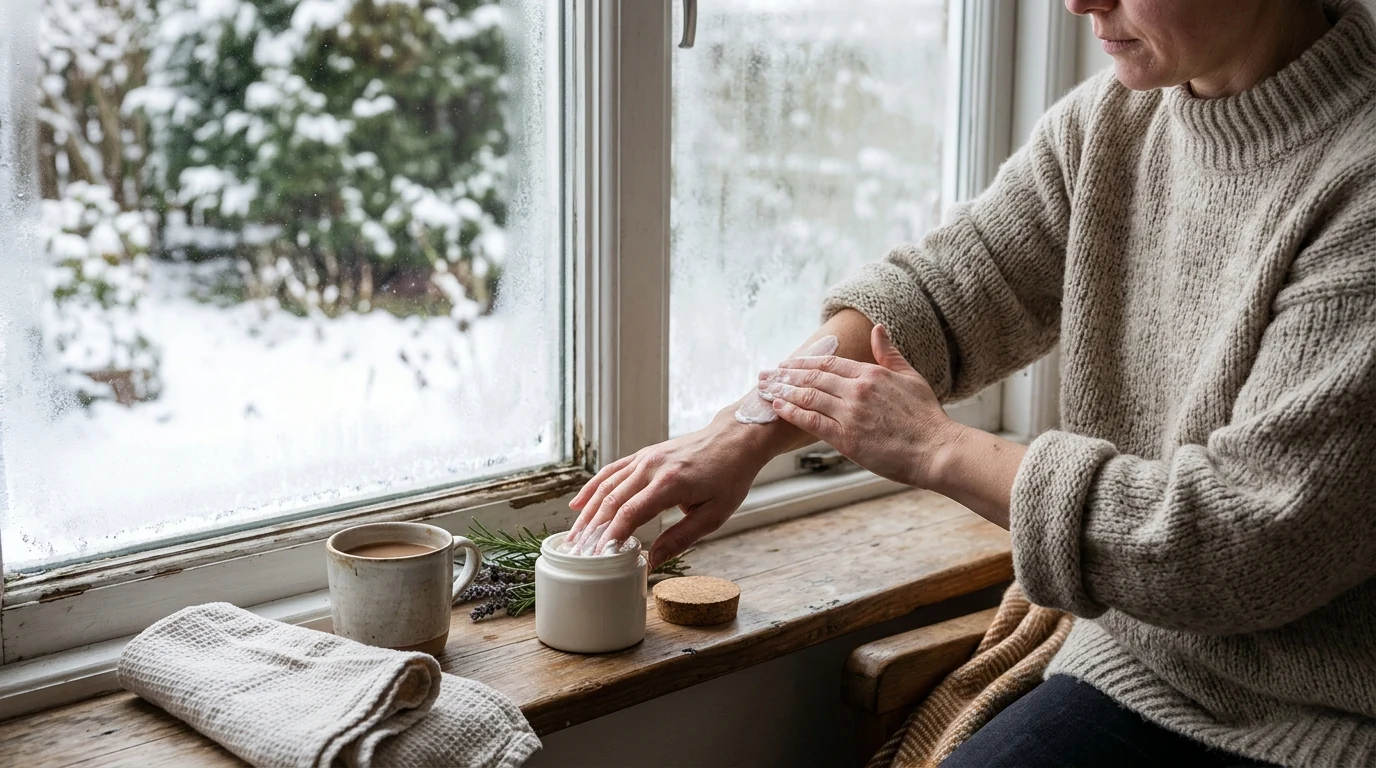
How should I care for my skin in the winter?
Winter skin care starts with protecting your skin barrier. Cold air, indoor heat, and hot showers can leave skin feeling dry, tight, or itchy. A gentler routine and a richer moisturizer can help your skin retain water without adding unnecessary steps.
Start with the essentials: a mild cleanser, moisturizer, and sunscreen. Adjust the texture and frequency of your products as your skin changes throughout the season. For a step-by-step checklist, explore our winter skin care guide.
What should my winter routine include?
Cleanse gently
Choose a fragrance-free cream, lotion, or gentle gel cleanser that leaves your skin comfortable rather than squeaky-clean. Wash with lukewarm water, and keep showers short. If your face feels dry in the morning, you may find that rinsing with water is enough before moisturizing.
Moisturize while skin is damp
Apply moisturizer after washing, while your skin is still slightly damp. Look for ingredients such as glycerin or hyaluronic acid to help draw in water, along with ceramides or petrolatum to support moisture retention. A cream is often more protective than a lightweight lotion when the air is dry.
For especially dry areas, such as hands, elbows, and heels, apply a thicker cream or a thin layer of petroleum jelly. Reapply hand cream after washing your hands.
Keep using sunscreen
Cold weather does not eliminate sun exposure. Each morning, apply a broad-spectrum sunscreen with SPF 30 or higher to exposed skin. Reapply at least every two hours when you are outdoors, and after swimming or sweating. Snow can reflect sunlight, making protection especially important during winter activities.
Should I change my active ingredients?
If your skin becomes irritated, scale back exfoliating acids, scrubs, and retinoids rather than layering them onto already sensitive skin. Use them less often and focus on moisturizing. Stop using a product that causes persistent burning or a rash, and consult a dermatologist if symptoms do not improve.
Our team also recommends using a humidifier if indoor air feels dry and choosing fragrance-free products when your skin is easily irritated. Small, consistent changes can make a noticeable difference.
FAQ
What can I use for dry, chapped lips?
Apply a fragrance-free lip balm or petroleum jelly regularly, especially before going outdoors and at bedtime. Avoid licking your lips, which can make dryness worse.










Leave a comment