-
Shop
- Advanced Technologies
- Beauty
- Best-Sellers
- Car Accessories
- Dating & Social Skills
- Digital Resources
- AI & Technology
- AI Skills
- Car Buying & Ownership
- Cozy Feast Collection
- Electronics & Technology
- Emotional Intelligence
- Financial Education
- Hobbies
- Home Styling & Organization
- Kitchen & Recipes
- Mindfulness
- Mindset
- Online Business
- Parenting & Child Development
- Pet Lifestyle & Wellness
- Positive Thinking
- Productivity
- Self Confidence
- Sleep Improvement
- Smart Life with AI
- Stress Management & Relaxation
- Travel Planning
- Yoga & Fitness
- Yoga & Mind-Body Practices
- Education & Learning
- Family & Parenting
- Fashion
- Fashion Accessories
- Furniture
- Gadgets
- Health & Beauty
- Health & Wellness
- Home & Garden
- Home Supplies
- Kids & Babies
- Kitchen
- Kitchen Best-Sellers
- Lighting
- Patio, Lawn & Garden
- Personal Growth
- Personal Style & Fashion
- Pet Care
- Pet Supplies
- Pets
- Sport & Outdoors
- Super Deals
- TikTok Growth & Monetization Mastery
- Travel
- Wealth
- Wealth Building
- Budgeting & Saving
- Cryptocurrency Investing
- Debt Management
- Entrepreneurship & Business Growth
- Family Finance & Budgeting
- Financial Independence
- Financial Mindset & Psychology
- Financial Planning
- Frugal Living & Expense Hacks
- Goal Setting
- High-Income Skills
- Investing Basics
- Leadership
- Motivation
- Networking & Mentorship
- Passive Income Strategies
- Real Estate Investing
- Side Hustles
- Stock Market Investing
- Wellness
- Popular
- Best deals
Southeast Asian Bamboo & Rattan Pendant: Soft Glow
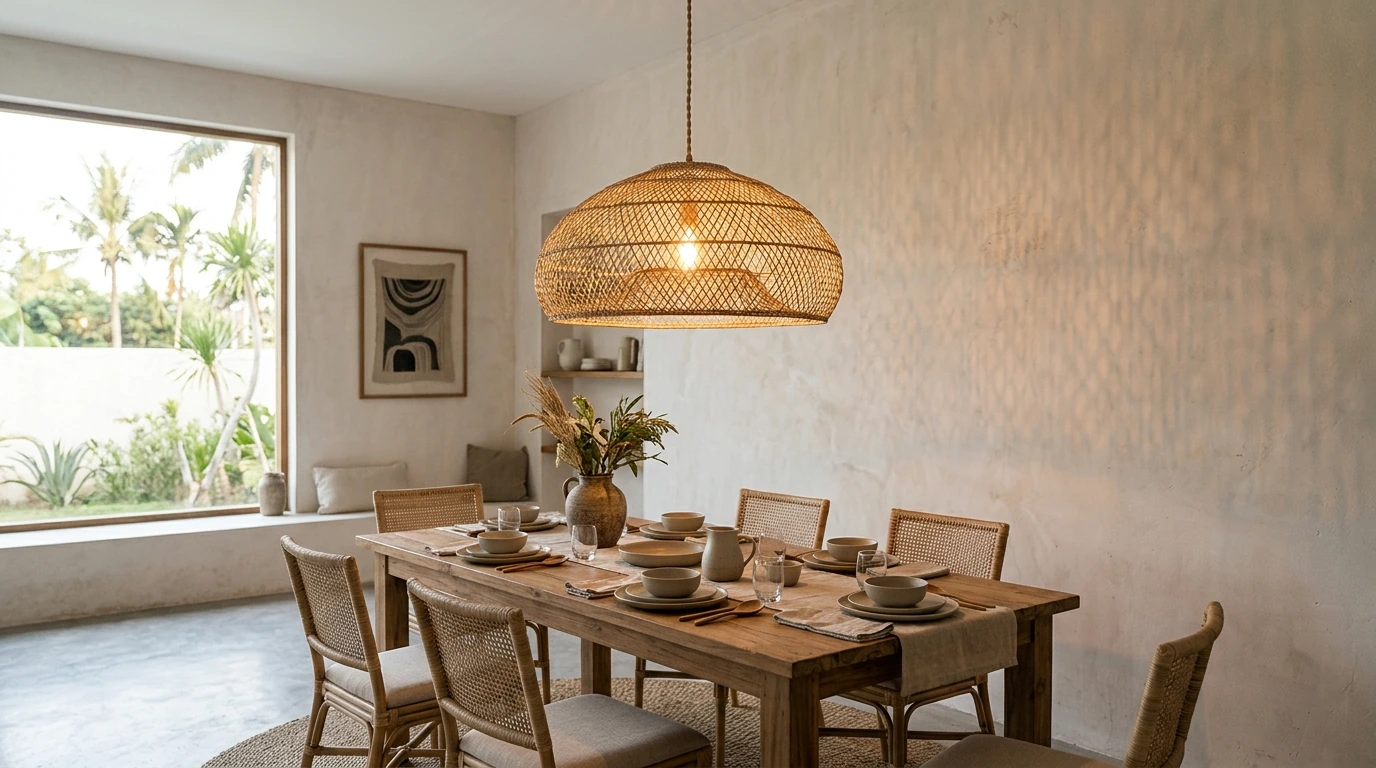
Warm Texture, Sculptural Light: A Southeast Asian-Inspired Take on Bamboo and Rattan
Bamboo and rattan lighting brings an easy, lived-in warmth that suits everything from coastal calm to modern minimalism. A Southeast Asian-inspired pendant chandelier pairs handwoven texture with an airy silhouette, letting light pass through in a way that feels soft, patterned, and intentional—especially over dining tables, kitchen islands, and open living spaces. The result is both grounding (thanks to natural fibers) and quietly dramatic (thanks to sculptural volume). For more guidance, see Khmer visual narrative – UNESCO Digital Library.
Because plant-fiber shades naturally diffuse and “break up” brightness, they tend to flatter a room at night—making hard surfaces feel less stark and creating a gentle sense of atmosphere. When paired with warm LEDs and a dimmer, woven lighting can move easily from practical illumination to relaxed evening glow. For further reading, see ASEAN Hall – Jeju – 한-아세안센터.
What Makes This Style Feel Southeast Asian-Inspired
Southeast Asian-inspired interiors often highlight natural materials, breathable construction, and craftsmanship that celebrates subtle variation. Bamboo and rattan fit that sensibility perfectly: their organic irregularities add character that manufactured, perfectly uniform surfaces can’t replicate.
- Natural plant fibers emphasize craft, breathability, and texture-forward design.
- Open-weave construction creates gentle shadow play on walls and ceilings, adding ambience without harsh glare.
- Structure plus softness: bamboo provides form, while rattan weaving adds depth and movement.
- Easy material pairing with teak, acacia, linen, seagrass, and matte ceramics for a relaxed, resort-like mood.
Best Rooms and Placements
A woven pendant chandelier can be a statement piece without visually “closing in” a room. That’s why it works across multiple spaces—especially where you want warmth and texture, but still want open sightlines.
- Dining table centerpiece: center it to anchor the room; choose a generous scale so it reads as the focal point.
- Kitchen island: make it the style moment over seating; an airy shade keeps the kitchen feeling open.
- Living room: complements low-profile seating and layered textures; especially effective with higher ceilings.
- Bedroom: softens the space and pairs well with woven headboards and warm bulbs.
- Entryway: creates a welcoming first impression with sculptural volume and natural tone.
Quick placement guide
| Location | Common goal | Practical tip |
|---|---|---|
| Dining table | Define the gathering zone | Hang so the bottom of the fixture is roughly 30–36 in above the tabletop |
| Kitchen island | Functional light with style | If using multiple pendants, align and space evenly for symmetry |
| Living room | Ambient glow and texture | Use warm LEDs and keep nearby surfaces matte to reduce glare |
| Bedroom | Soft, calming mood | Choose warmer color temperatures and consider dimming |
How to Choose the Right Size and Hanging Height
With woven lighting, the “right” size is as much about visual weight as it is about inches. A larger shade can still feel light if it’s open-weave, while a smaller, tightly woven shade can feel denser than expected.
- Room scale: larger open-concept rooms can handle wider, more dramatic silhouettes; smaller rooms benefit from lighter visual mass.
- Ceiling height: taller ceilings allow longer drops; standard ceilings often look best with a tighter, controlled drop.
- Table or island width: keep the fixture visually “inside” the furniture footprint so it feels intentional, not crowded.
- Clearance and comfort: avoid head-bump zones in walkways; prioritize clear sightlines across a dining table.
- Dimming: woven shades shine when brightness can shift from task lighting to evening glow.
Lighting Effect and Bulb Selection
The most charming feature of bamboo and rattan is the light it creates: a soft sparkle through the weave and gentle shadows that move across walls and ceilings. That effect tends to look strongest against lighter paint colors and simple ceiling planes.
- Choose warm white bulbs (often 2700K–3000K) for a cozy, natural look that suits plant fibers.
- Prefer LED for low heat output, which helps protect natural fibers over time and reduces energy use (see the U.S. Department of Energy guidance on efficient lighting choices).
- Reduce glare with frosted bulbs or bulb shapes that sit slightly higher within the shade.
- Add a dimmer to transition from brighter prep time to relaxed, restaurant-like ambiance.
For deeper reading on residential lighting practices and principles, the Illuminating Engineering Society maintains standards and recommended practices here: https://www.ies.org/standards/.
Styling Ideas for Different Interiors
A Southeast Asian-inspired woven chandelier plays well with many aesthetics because it acts like a “texture bridge”—softening modern materials while elevating relaxed spaces with sculptural form.
Care and Maintenance for Bamboo and Rattan Lighting
Southeast Asian-Inspired Bamboo and Rattan Pendant Chandelier
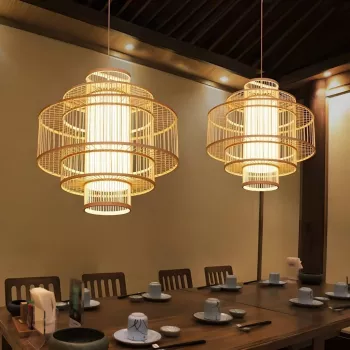
If you’re looking for a focal-point light that feels warm, textural, and airy, the Southeast Asian-Inspired Bamboo and Rattan Pendant Chandelier brings handwoven character and a naturally warm tone to dining areas, islands, and open living spaces. Its open weave is designed to cast a soft, patterned glow while keeping the silhouette visually light—ideal for softening rooms with stone, metal, or crisp cabinetry.
More in-stock picks
- Versace Reversible Jacket with Iconic Barocco Pattern
- Understanding Attachment Theory for Parents – A Practical Parenting Guide (Digital Download)
FAQ
Is bamboo and rattan lighting bright enough for a dining room?
It can be, as long as the bulb output (lumens) matches the room and the weave isn’t overly dense. Warm LEDs plus a dimmer give flexibility, and adding layered lighting (like sconces or a floor lamp) helps when higher task light is needed.
Can a woven rattan chandelier be used in a kitchen?
Yes, with good ventilation and sensible placement away from heavy grease, steam, and direct splashes. Regular dusting and LED bulbs (for lower heat) help keep the natural fibers in good condition.
How high should a pendant chandelier hang above a table?
A common guideline is to hang the bottom of the fixture about 30–36 inches above the tabletop. Adjust slightly based on ceiling height and sightlines so guests can see each other comfortably across the table.









Leave a comment