

Smart Spaces for Kids: Storage Zones That Work
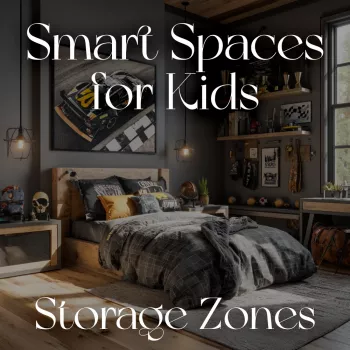
A child’s room can support play, getting dressed, and winding down without requiring a separate shelf for every activity. The key is to give everyday belongings sensible homes that are easy to reach and easy to maintain.
Our Smart Spaces for Kids digital guide offers a practical starting point for planning an organized, functional room. Before you buy bins or move furniture, take a look at how your child actually uses the space.
Start With Your Child’s Everyday Activities
Notice where your child naturally plays, reads, dresses, and sleeps. A favorite spot on the floor may work well for blocks, while a chair or bedside area may be the right place for a few books. Think about what needs to be close at hand for each activity and what can be stored elsewhere.
Next, gather belongings into broad groups: toys, books, clothes, and creative supplies. You do not need to sort every crayon by color. Simple categories make it easier to see how much storage you need and help your child understand where things belong.
Keep frequently used, age-appropriate items within easy reach. Higher storage can hold supplies an adult manages, such as materials with small parts or craft tools that require supervision.
Create Simple Zones for Play, Books, and Clothing
A zone is a designated home for an activity and its supplies, not necessarily a separate area with its own furniture. The following setups can help you group belongings without filling every corner with storage.
| Zone | What to Store | Practical Setup |
|---|---|---|
| Play | Toys, blocks, and games | Group similar items in easy-to-reach bins |
| Reading | Books and favorite stories | Arrange books where covers or titles are visible |
| Clothing | Everyday clothes and accessories | Use accessible drawers or clearly marked baskets |
| Creative | Paper, crayons, and craft supplies | Keep materials together in a portable container |
Choose one clear home for each category. If games live in a particular bin, your child has a straightforward place to return them after play. A portable container can also let a creative zone share a table or floor space with another activity.
Work with the room you have. A small basket of books beside the bed may be more useful than a large bookcase, and a few clothing baskets inside a closet can keep the floor open. Leave enough space for your child to move comfortably between activities.
Make Each Zone Easy to Use
Labels can turn tidying into a simple matching task. Use pictures for a child who is not yet reading, words for a confident reader, or both if the room is shared. Place labels where they are easy to see, such as on the front of a drawer or basket.
Choose containers that leave some breathing room. When a bin is packed so tightly that toys need careful stacking, putting them away becomes a chore. If a category regularly overflows, divide it into two manageable groups or remove items that are no longer used.
Safety matters as much as convenience. Anchor furniture and follow the manufacturer’s safety instructions. Keep small parts and other hazards away from young children, and choose storage access that suits your child’s abilities. The U.S. Consumer Product Safety Commission’s Anchor It! resource offers furniture tip-over prevention guidance, while HealthyChildren.org’s toy safety guidance can help you assess age-appropriate play materials.
Keep the Room Flexible as Needs Change
Invite your child to help decide where favorite belongings go. You might offer two accessible locations for books or let your child choose a picture for the toy-bin label. Practicing a short reset together after play helps turn those choices into a familiar routine.
Revisit the setup when interests, clothing sizes, or daily routines change. A basket that once held stuffed animals might later hold art supplies, while outgrown clothes can make room for current favorites. You do not have to redesign the whole room; adjust the zone that is no longer working.
For more help planning the space, explore our Smart Spaces for Kids digital guide. It focuses on creating storage zones for organized, functional children’s spaces and can help you approach the room as a collection of manageable activities.
Build a Simple Storage Maintenance Routine
Set aside a few minutes regularly to return items to their homes. You can make the reset part of the transition from playtime to another activity, rather than waiting until the entire room needs attention.
Periodically look through each category together and remove belongings that are no longer used or have been outgrown. Decide what to donate, recycle, or store elsewhere, then leave enough space for the items that remain. Our storage maintenance checklist is a related digital resource for keeping storage areas manageable over time.
FAQ
How do I organize a small child’s room into zones?
Group belongings by activity and give each category a clear home. Use shared areas or portable containers when separate zones are not practical.
How can children help keep their rooms organized?
Give belongings clear, accessible homes and use picture or word labels your child can understand. Practice a short, consistent tidy-up routine together.
What is Smart Spaces for Kids?
Smart Spaces for Kids is a digital guide focused on creating storage zones for organized and functional children’s spaces.












Leave a comment