

Modular Furniture Guide for Flexible, Multi-Use Rooms
When one room has to handle work, relaxation, meals, and occasional guests, a fixed furniture arrangement can start to feel limiting. Modular furniture offers another way to plan: choose components that can adapt as your routine changes, rather than filling every corner with a separate piece for every task.
Our modular furniture guide is a practical starting point for flexible living. Before you shop or rearrange, take a closer look at how your room works now and what you need it to do next.
Start with the Ways You Use Your Room
List the activities that happen in the space on an ordinary day. You might read, work on a laptop, eat dinner, exercise, or watch a movie in the same room. Note which activities need to happen at the same time: a workspace used during family movie night has different requirements from one used only when everyone else is out.
Next, measure the room and sketch its fixed features, including doors, windows, outlets, and radiators. Measure doorways and any narrow hallways that furniture must pass through. Consider circulation routes too, especially the paths between the entrance, seating, storage, and adjoining rooms.
Plan one layout for your most common routine and a second for occasional needs. For example, your everyday arrangement might leave an open work area, while your guest layout brings seating together. This gives you a useful test for whether a modular setup will earn its place.
Match Modular Pieces to Everyday Tasks
Rearrangeable seating can shift from a quiet reading setup to a conversation area. Modular shelving can organize supplies or help define a work zone, while small tables can be moved where they are needed. The goal is not to make every piece perform every job; it is to select pieces that support your actual routines without crowding the room with single-purpose furniture.
Use these ideas as a starting point, then check individual furniture dimensions, configuration options, and other specifications before buying. Not every movable piece is modular, and not every modular system can be configured in the same ways.
| Space | Everyday use | Flexible arrangement |
|---|---|---|
| Living room | Relaxing and entertaining | Reposition seating modules to suit conversation or a quieter layout |
| Bedroom | Sleeping and working | Use movable storage to separate a compact work area |
| Studio | Dining and relaxing | Shift a small table and seating as activities change |
| Guest room | Hosting and hobbies | Arrange movable shelving to keep supplies accessible |
Think about the transition between uses, not just the finished arrangement. If clearing a table for dinner means moving a stack of work supplies every evening, a nearby storage spot can make the change much easier. Likewise, seating that comes apart is most useful when you have a clear place to put each component.
Make Small Spaces Easier to Change
In a small room, prioritize pieces that support more than one task and leave routes clear. A compact table might serve as a work surface during the day and a dining spot later, provided it is comfortable for both uses. Leave enough room to approach and use furniture, rather than measuring only whether it fits against a wall.
Also consider the effort involved in moving each piece. Weight, floor surfaces, and the need to remove items from shelves can turn a quick rearrangement into a chore. Decide where loose modules or accessories will sit when they are not in use so they do not block a doorway or become an obstacle.
Vertical storage can free floor space, but stability matters. Follow the manufacturer’s installation instructions and secure furniture where appropriate. The U.S. Consumer Product Safety Commission’s Anchor It! guidance explains ways to reduce furniture tip-over risks. A tall shelf that needs anchoring may be better treated as a fixed feature than as a piece you move frequently.
Put the Modular Furniture Guide to Work
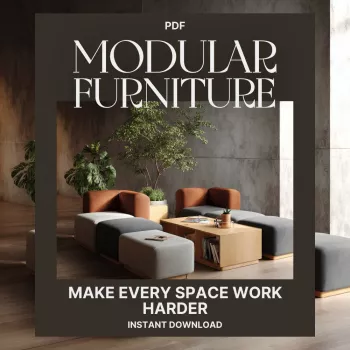
Our Make Every Space Work Harder with Modular Furniture guide is designed for planning multi-use rooms, small spaces, and flexible living arrangements. It is listed at $9.99; visit the product page for current availability and details.
If organization is part of your project, pair your room plan with our storage areas maintenance checklist. Planning where everyday items belong can help keep a flexible layout easy to use after the initial rearrangement.
Test Your Layout Before You Commit
Mark proposed furniture footprints on the floor with removable tape, then walk through your usual routes. Try opening doors, pulling out chairs, and reaching storage as you would during a normal day. Repeat the exercise for your occasional-use layout, including the space needed to move pieces between positions.
Check that outlets remain accessible and that furniture does not interfere with doors or storage. If someone in your household uses a mobility device, plan routes around their needs; the U.S. Access Board’s guide to accessible routes offers useful design considerations.
Finally, live with the arrangement for a while before deciding it is finished. Notice where clutter gathers, which pieces are difficult to move, and whether your second layout is practical. Our team recommends making small adjustments around real routines rather than keeping a layout simply because it looked good on paper.
FAQ
What is modular furniture?
Modular furniture is made from components that can be combined or rearranged, depending on the design. The available configurations vary by product.
How can modular furniture help a small room?
Adaptable pieces can support several activities, reducing the need for separate furnishings. Rearranging components can also help you make room for occasional uses.
What should I measure before choosing modular furniture?
Measure the room, doorways, and intended furniture footprints. Allow clear routes between frequently used areas and check that doors and storage remain accessible.












Leave a comment