-
Shop
- Advanced Technologies
- Beauty
- Best-Sellers
- Car Accessories
- Dating & Social Skills
- Digital Resources
- AI & Technology
- AI Skills
- Car Buying & Ownership
- Cozy Feast Collection
- Electronics & Technology
- Emotional Intelligence
- Financial Education
- Hobbies
- Home Styling & Organization
- Kitchen & Recipes
- Mindfulness
- Mindset
- Online Business
- Parenting & Child Development
- Pet Lifestyle & Wellness
- Positive Thinking
- Productivity
- Self Confidence
- Sleep Improvement
- Smart Life with AI
- Stress Management & Relaxation
- Travel Planning
- Yoga & Fitness
- Yoga & Mind-Body Practices
- Education & Learning
- Family & Parenting
- Fashion
- Fashion Accessories
- Furniture
- Gadgets
- Health & Beauty
- Health & Wellness
- Home & Garden
- Home Supplies
- Kids & Babies
- Kitchen
- Lighting
- Patio, Lawn & Garden
- Personal Growth
- Personal Style & Fashion
- Pet Care
- Pet Supplies
- Pets
- Sport & Outdoors
- Super Deals
- TikTok Growth & Monetization Mastery
- Travel
- Wealth
- Wealth Building
- Budgeting & Saving
- Cryptocurrency Investing
- Debt Management
- Entrepreneurship & Business Growth
- Family Finance & Budgeting
- Financial Independence
- Financial Mindset & Psychology
- Financial Planning
- Frugal Living & Expense Hacks
- Goal Setting
- High-Income Skills
- Investing Basics
- Leadership
- Motivation
- Networking & Mentorship
- Passive Income Strategies
- Real Estate Investing
- Side Hustles
- Stock Market Investing
- Wellness
- Popular
- Best deals
Magnetic Tiles with Cars: Build Ramps, Tunnels & Garages
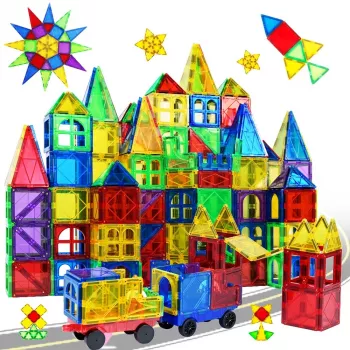
Magnetic Building Tiles with Cars: Build Tracks, Garages, and Rolling Creations
Magnetic building tiles with cars combine open-ended construction with vehicle play, letting kids design roads, ramps, tunnels, and garages that can be rebuilt in minutes. The result is a toy that feels “new” every time it comes out: build, test, crash, redesign, and roll again. Below are the typical parts you’ll see in these sets, why the car element changes the whole experience, safety notes worth taking seriously, and build ideas that keep hands and minds busy.
What These Sets Are and What’s Usually Included
Magnetic tile sets are made of flat, colorful shapes that connect edge-to-edge using embedded magnets. They can form everything from a simple roadway on the floor to a 3D tunnel or tower. When cars are included, the play expands from “building something that stands” to “building something that works.”
- Edge-to-edge connections: Tiles snap together to form flat layouts or 3D structures like bridges, towers, and tunnels.
- Car bases and chassis-style pieces: Many sets include rolling bases, often with a magnetic top, so tiles can attach as platforms, trailers, or body panels.
- Core shapes: Squares and triangles are common; window tiles and specialty pieces like ramps or road panels vary by set.
- Multiple play styles: City pretend play, “engineering” challenges, and collaborative building all fit naturally.
- Fast resets: No tools, no waiting—builds pull apart and reconfigure quickly, which works well for short play windows.
For a ready-to-play option designed around both construction and vehicle play, see Magnetic Building Tiles with Cars.
Why Cars Make Tile Play More Engaging
Cars add movement, and movement creates purpose. Instead of building a tall structure “just because,” kids often start building toward a goal: a ramp that rolls smoothly, a garage that fits two vehicles, or a bridge that doesn’t sag under a test drive.
- Clear feedback loop: If the ramp is too steep, the car flies off; if the lane is too narrow, it jams. The build itself teaches what to change.
- Iterative problem-solving: Kids naturally adjust slope, reinforce walls, widen roadways, and test again—real design thinking in kid form.
- Storytelling support: Parking lots, car washes, rescue stations, and delivery routes add a narrative layer that keeps interest high.
- Great for group play: One child can build infrastructure while another “drives quality control,” then swap roles.
- Progression to 3D engineering: Cars encourage stronger, purpose-built structures (like tunnels and multi-level garages) rather than simple stacks.
Build Ideas That Work Well With Rolling Cars
These builds are fun because they’re testable: a car either makes it through, or it doesn’t. Start simple, then add constraints like “must hold two cars” or “must include an exit ramp.”
Ramps and launch pads
Begin with a low ramp and increase height gradually. Add side rails (two tiles standing vertically) to reduce wipeouts and help kids focus on slope control rather than constant rerailing.
Multi-level garage
Use squares as floors and triangles as supports. Keep the first level wide and stable, then add a second “parking deck” with an opening that cars can enter and exit.
Tunnel and bridge combo
Build a drive-through tunnel, then span a bridge on top. Reinforce the arch with extra tiles and widen the bridge deck so it doesn’t twist when pushed.
Switchback road
Service station
Quick Builds and What They Teach
| Build | Suggested pieces | Skill focus |
|---|---|---|
| Simple ramp | Squares + 2 triangles | Cause-and-effect, slope control |
| Two-car garage | Squares + window tiles | Spatial planning, sizing |
| Bridge over tunnel | Squares + triangles | Structural support, balance |
| Parking lot with lanes | Squares/rectangles | Patterning, organization |
| Spiral tower (advanced) | Mixed shapes + reinforcement | 3D thinking, stability testing |
Safety and Durability Considerations for Magnetic Toys
Magnetic toys are fun because they feel “powerful,” but that’s also why it’s important to choose quality construction and follow age guidance closely. For general toy safety practices, the American Academy of Pediatrics has a helpful overview here: American Academy of Pediatrics — Toy Safety.
For additional guidance about magnet-related hazards, review the Consumer Product Safety Commission information: CPSC — High-Powered Magnets (Safety Information).
How to Set Up Play for Different Ages
For families who like pairing hands-on play with practical parenting tools, Understanding Attachment Theory for Parents – A Practical Parenting Guide Explaining what attachment theory means for parents | Digital Download can be a useful resource for thinking about connection, routines, and co-regulation during play and transitions.
What to Look For Before Buying
Product Snapshot: Magnetic Building Tiles with Cars
- A ready-to-play set designed for both construction and vehicle-based pretend play.
- Works well for creating ramps, garages, tunnels, and “road” layouts that can be rebuilt quickly.
- Useful as a standalone gift or as a centerpiece set for a building-and-vehicles play corner.
- For current photos, included specialty pieces, and availability, visit Magnetic Building Tiles with Cars.
FAQ
Are magnetic tiles with cars safe for young children?
They can be safe when you follow the set’s age rating, supervise younger children closely, and choose tiles with magnets fully enclosed inside the plastic. Regularly inspect pieces for cracks and remove any damaged tiles immediately, especially in homes with toddlers.
Do the cars attach to the tiles or just drive around them?
Many sets include magnetic car bases that attach to tiles so kids can build platforms, trailers, or car “bodies.” Cars can also simply drive around tile-built roads and through tunnels, depending on the parts included.
How can a ramp be built so the cars roll smoothly without collapsing?
Use a wide base, increase height in small steps, and reinforce the ramp from underneath with extra tiles or stacked supports. Side rails help keep cars on track, and quick test runs make it easy to spot where the structure needs strengthening.
Recommended for you


Seasonal Reset Toolkit: Calm Closets in Every Season
Sep 14, 2026
Sunburn Recovery Checklist: Fast Relief in 5 Days
Sep 14, 2026













Leave a comment