-
Shop
- Advanced Technologies
- Beauty
- Best-Sellers
- Car Accessories
- Dating & Social Skills
- Digital Resources
- AI & Technology
- AI Skills
- Car Buying & Ownership
- Cozy Feast Collection
- Electronics & Technology
- Emotional Intelligence
- Financial Education
- Hobbies
- Home Styling & Organization
- Kitchen & Recipes
- Mindfulness
- Mindset
- Online Business
- Parenting & Child Development
- Pet Lifestyle & Wellness
- Positive Thinking
- Productivity
- Self Confidence
- Sleep Improvement
- Smart Life with AI
- Stress Management & Relaxation
- Travel Planning
- Yoga & Fitness
- Yoga & Mind-Body Practices
- Education & Learning
- Family & Parenting
- Fashion
- Fashion Accessories
- Furniture
- Gadgets
- Health & Beauty
- Health & Wellness
- Home & Garden
- Home Supplies
- Kids & Babies
- Kitchen
- Kitchen Best-Sellers
- Lighting
- Patio, Lawn & Garden
- Personal Growth
- Personal Style & Fashion
- Pet Care
- Pet Supplies
- Pets
- Sport & Outdoors
- Super Deals
- TikTok Growth & Monetization Mastery
- Travel
- Wealth
- Wealth Building
- Budgeting & Saving
- Cryptocurrency Investing
- Debt Management
- Entrepreneurship & Business Growth
- Family Finance & Budgeting
- Financial Independence
- Financial Mindset & Psychology
- Financial Planning
- Frugal Living & Expense Hacks
- Goal Setting
- High-Income Skills
- Investing Basics
- Leadership
- Motivation
- Networking & Mentorship
- Passive Income Strategies
- Real Estate Investing
- Side Hustles
- Stock Market Investing
- Wellness
- Popular
- Best deals
How to Use a 5-Hole Meatball Maker Mold
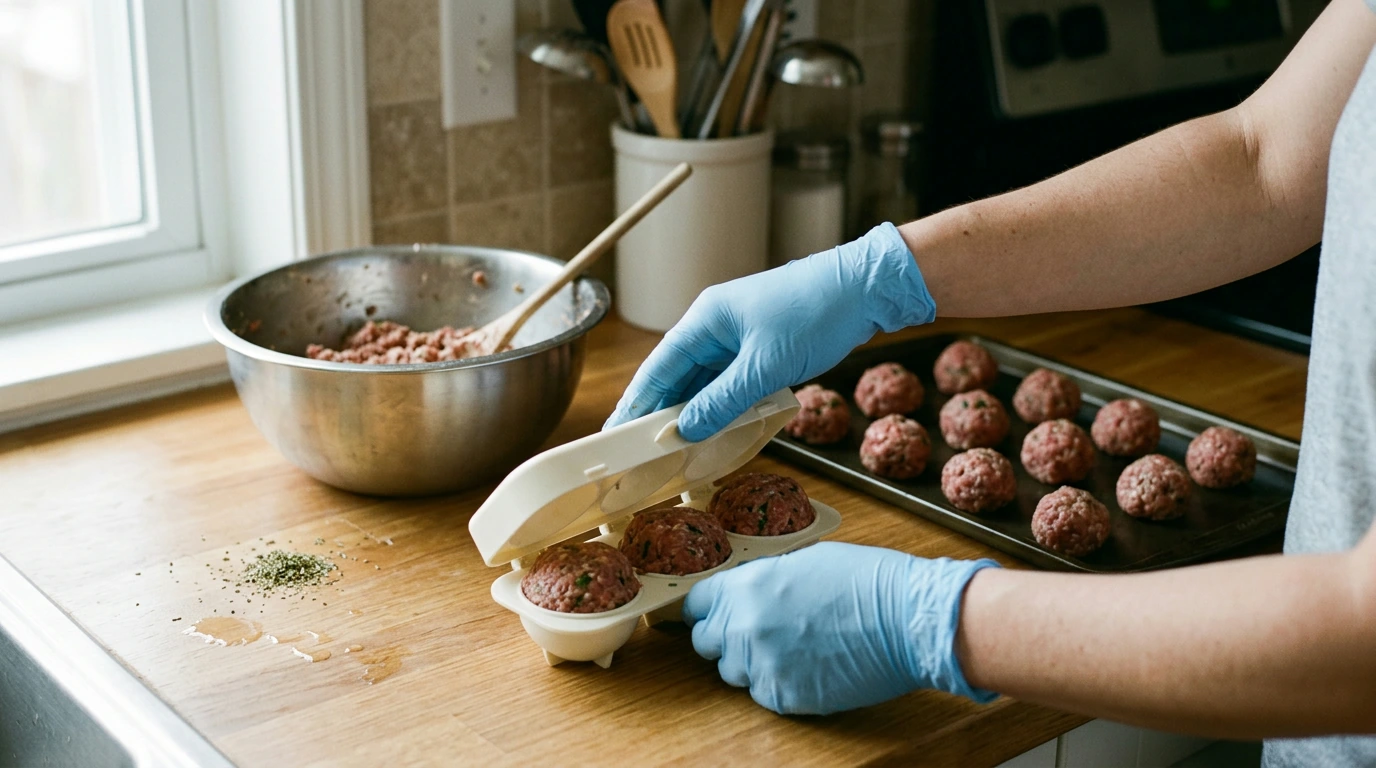
Meatballs can fit almost any dinner plan, from pasta night to a rice bowl built around leftovers. Shaping them one by one, though, can make a simple recipe feel like a project. Our 5-hole meatball maker mold gives you a way to form five portions in one pass. It handles the shaping step; your recipe, cooking method, and food-safe habits handle the rest.
A simpler rhythm for meatball prep
Our Meatball Maker Mold – 5 Hole Food Grade Plastic Tool for Quick and Easy Meatballs is most useful when you have more than a few meatballs to make. For a family dinner, you can move through a batch in groups rather than shaping every portion entirely by hand. The same approach works when you’re preparing party appetizers or making meatballs for a later meal.
Think of the mold as a portioning aid, not a guarantee that every meatball will be identical. How much mixture you put into each opening and how readily your recipe holds together will affect the results. Our team recommends choosing your recipe and setting up your workspace first, then using the mold as one repeatable step in the process.
Get the mixture ready before shaping
Start with a favorite meatball recipe and mix just until its ingredients are combined. Working ground meat more than necessary can make cooked meatballs dense. If the mixture is unusually wet and sticks heavily, or is so crumbly that portions fall apart, adjust it according to your recipe before shaping. The mold won’t correct a mixture that cannot hold together on its own.
Set out the mixture, mold, and a clean plate or tray within easy reach. Give the formed meatballs enough room on the tray that you can pick them up without disturbing their neighbors. If you’re cooking in batches, decide where each batch will wait so raw meatballs stay separate from cooked food.
| Step | What to do | Why it helps |
|---|---|---|
| Prepare | Mix your chosen recipe and set out a clean tray. | Keeps shaping organized. |
| Shape | Portion the mixture into the five openings and release the formed meatballs. | Lets you work through the batch in groups. |
| Cook | Use your recipe’s cooking method and check the center with a food thermometer. | Confirms doneness more reliably than appearance. |
| Finish | Wash the tool after contact with raw meat and clean the work surface. | Helps prevent cross-contamination. |
Use the mold without making a mess
Work in a steady sequence: portion mixture into the five openings, form the meatballs, release them onto your tray, and repeat until the mixture is used. You don’t need to rush. Keeping the tray close makes transfers simpler and gives you a chance to see whether the portions are holding their shape before you continue.
Keep utensils, hands, and surfaces that have touched raw meat away from ready-to-eat foods. Wash your hands after handling the mixture and before reaching for clean dishes or toppings. The mold is a shaping tool, not a cooking vessel, so cook the meatballs separately. Follow any care instructions supplied with the tool rather than assuming it belongs in a dishwasher or can be placed on a hot surface.
Cook for the meal you have in mind
Once shaped, cook the meatballs using the method in your recipe. You might simmer cooked meatballs in tomato sauce for dinner, serve them over rice with vegetables, or make smaller portions for an appetizer spread. If you change their size, expect the cooking time to change too. Ingredients and cooking method also affect how long they take.
Don’t use color alone to judge doneness. Insert a food thermometer into the center of a meatball: ground beef, pork, veal, and lamb should reach 160°F, while ground poultry should reach 165°F. These temperatures are listed in FoodSafety.gov’s safe minimum internal temperature chart. Check more than one meatball when sizes vary, and keep the thermometer probe clean between raw and cooked foods.
If you’re preparing dinner alongside other household tasks, a simple order helps: finish raw-meat prep, clear and clean the work area, then assemble foods that won’t be cooked. For broader guidance on separating foods and cleaning during meal prep, see the FDA’s food safety at home guidance.
Clean up and plan the next batch
After the mold has touched raw meat, wash it thoroughly with warm, soapy water. Pay attention to the inside of each opening and any places mixture may collect, then rinse and dry it. Clean the tray, utensils, counters, and other surfaces that contacted the raw mixture as well.
Put raw mixture and cooked meatballs away promptly rather than leaving them out while you tidy up. Refrigerate or freeze them according to your recipe and current food-safety guidance. If you’re making a batch for later, planning its storage before you start shaping makes cleanup less hectic.
For your next homemade batch, explore our 5-hole meatball maker mold and build a prep routine that suits the amount you’re cooking. If family dinner planning is the bigger challenge, our practical parenting guide is another resource you can browse; it isn’t needed for making meatballs.
FAQ
Does a meatball mold cook the meatballs?
No. It shapes the mixture; cook the meatballs separately using your recipe and verify doneness with a food thermometer.
Can the mold be used with ground poultry?
Yes, you can use it to shape a ground-poultry meatball mixture. Prevent cross-contamination during prep and cook the meatballs to 165°F.
How should I clean the mold after use?
Wash it thoroughly after contact with raw meat, including inside the openings, then rinse and dry it. Follow any product-specific care instructions.















Leave a comment