-
Shop
- Advanced Technologies
- Beauty
- Best-Sellers
- Car Accessories
- Dating & Social Skills
- Digital Resources
- AI & Technology
- AI Skills
- Car Buying & Ownership
- Cozy Feast Collection
- Electronics & Technology
- Emotional Intelligence
- Financial Education
- Hobbies
- Home Styling & Organization
- Kitchen & Recipes
- Mindfulness
- Mindset
- Online Business
- Parenting & Child Development
- Pet Lifestyle & Wellness
- Positive Thinking
- Productivity
- Self Confidence
- Sleep Improvement
- Smart Life with AI
- Stress Management & Relaxation
- Travel Planning
- Yoga & Fitness
- Yoga & Mind-Body Practices
- Education & Learning
- Family & Parenting
- Fashion
- Fashion Accessories
- Furniture
- Gadgets
- Health & Beauty
- Health & Wellness
- Home & Garden
- Home Supplies
- Kids & Babies
- Kitchen
- Kitchen Best-Sellers
- Lighting
- Patio, Lawn & Garden
- Personal Growth
- Personal Style & Fashion
- Pet Care
- Pet Supplies
- Pets
- Sport & Outdoors
- Super Deals
- TikTok Growth & Monetization Mastery
- Travel
- Wealth
- Wealth Building
- Budgeting & Saving
- Cryptocurrency Investing
- Debt Management
- Entrepreneurship & Business Growth
- Family Finance & Budgeting
- Financial Independence
- Financial Mindset & Psychology
- Financial Planning
- Frugal Living & Expense Hacks
- Goal Setting
- High-Income Skills
- Investing Basics
- Leadership
- Motivation
- Networking & Mentorship
- Passive Income Strategies
- Real Estate Investing
- Side Hustles
- Stock Market Investing
- Wellness
- Popular
- Best deals
How to Start Investing in an S&P 500 Index Fund
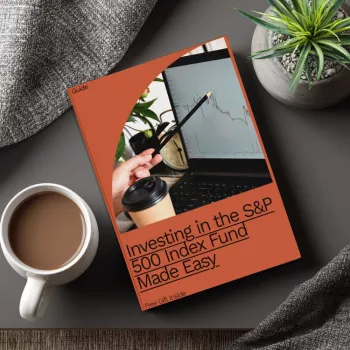
Starting to invest can feel complicated, but your first steps do not have to be. An S&P 500 index fund gives you a way to invest in a group of large U.S. companies without choosing individual stocks. Our team put together this beginner’s starting plan to help you understand what you would be buying, compare the costs, and decide whether investing fits your finances right now.
What an S&P 500 index fund does
The S&P 500 is an index that tracks large U.S. companies. An S&P 500 index fund aims to follow that index rather than have a manager select stocks in an effort to beat it. When you buy shares of the fund, you gain exposure to many companies through one investment.
That variety does not guarantee a profit. The fund can lose value when the market falls, and it does not cover every part of the market. For example, its focus on large U.S. companies means it is not, by itself, a complete mix of U.S. and international investments. For a closer look at how index funds work, see Investor.gov’s guide to index funds.
You will commonly see two fund formats. An index mutual fund is bought through the fund company or an investment account, with purchases typically priced once per trading day. An exchange-traded fund (ETF) trades on an exchange during market hours, so its price can change throughout the day. Both can track the S&P 500; their buying rules may differ.
Get your finances ready before you buy
Before investing, separate money you may need soon from money you can leave invested for longer. Near-term bills and an emergency cushion deserve consideration because you may have to sell at a loss if you need cash during a market decline. High-interest debt also belongs in the decision: paying it down may be more pressing than taking on investment risk.
Ask yourself when you expect to use the money and how you would respond if your account balance dropped. If a decline would force you to sell or keep you from meeting essential expenses, consider whether your investment amount or timing needs to change. You do not need a perfect forecast of the market, but you do need a plan you can afford to follow.
One possible routine is investing a manageable amount regularly. This can make the decision easier to budget for, but it does not prevent losses or make any particular purchase date safe. Choose an amount that leaves room for your other priorities.
Compare funds without getting lost in the details
Start with the fund’s stated objective: does it track the S&P 500? Then look at its expense ratio, the ongoing fund cost expressed as a percentage. Even funds following the same index can have different fees, minimum purchases, and trading mechanics. Your brokerage account may have costs or rules of its own. Investor.gov explains why fees and expenses matter over time.
Use this checklist to compare your options, not as a ranking or a recommendation to buy a particular fund.
| What to check | Why it matters | Question to ask |
|---|---|---|
| Index tracked | Confirms what the fund is designed to follow | Does it track the S&P 500? |
| Expense ratio | Ongoing fund costs reduce returns | What does the fund charge each year? |
| Fund type | ETFs and mutual funds have different trading and purchase mechanics | Which format fits my account and buying routine? |
| Account costs and minimums | Brokerage rules can affect how you get started | Are there fees or a minimum initial purchase? |
Also consider how you want to place purchases. Some accounts allow fractional ETF shares or automatic mutual fund purchases; others do not. Those features can matter if you plan to invest smaller amounts. Confirm the rules in the account you intend to use rather than assuming every brokerage works the same way.
Make your first purchase—and know what comes next
Once you are comfortable with the decision, the basic sequence is straightforward:
- Choose an investment account that suits your purpose.
- Add money you have decided you can invest.
- Find the fund using its name or ticker symbol, and confirm you have selected the intended fund.
- Enter the purchase amount, review the order details and any costs, then confirm the order.
Account choice deserves a pause before you buy. Taxable brokerage accounts and retirement accounts can have different tax treatment, withdrawal rules, and contribution limits. Understand the rules that apply to you, including any consequences of taking money out of a retirement account early. If you are unsure how those rules affect your situation, consider getting qualified tax or financial guidance.
Keep a beginner-friendly guide close at hand
If you would like a dedicated companion as you learn, you can explore our Investing in the S&P 500 Index Fund Made Easy: Your Ultimate Guide for Beginners. It is an optional learning resource, not a substitute for deciding whether an investment or account is suitable for you.
Our store also has resources for other goals. For example, The Ultimate Employee Motivation Checklist addresses workplace motivation, not investing; you do not need it to follow this starting plan.
FAQ
Can you lose money in an S&P 500 index fund?
Yes. Its value can fall when the companies in the index decline, and holding many companies does not eliminate market risk.
Do I need a large amount to start investing?
Not necessarily. Starting requirements depend on the fund and brokerage, so review minimum purchases, fractional-share availability, and fees.
Is an S&P 500 fund the same as a complete investment portfolio?
No. It focuses on large U.S. companies; a broader portfolio may include other investments depending on your goals and risk tolerance.
Recommended for you



Minimalist Gold-Plated Ear Clips: Style, Fit & Care
Oct 24, 2026
Plaid Bow Tie Cat & Dog Collar With Bell: Fit Guide
Oct 25, 2026













Leave a comment