


Home Storage Labeling Guide: Organize Room by Room
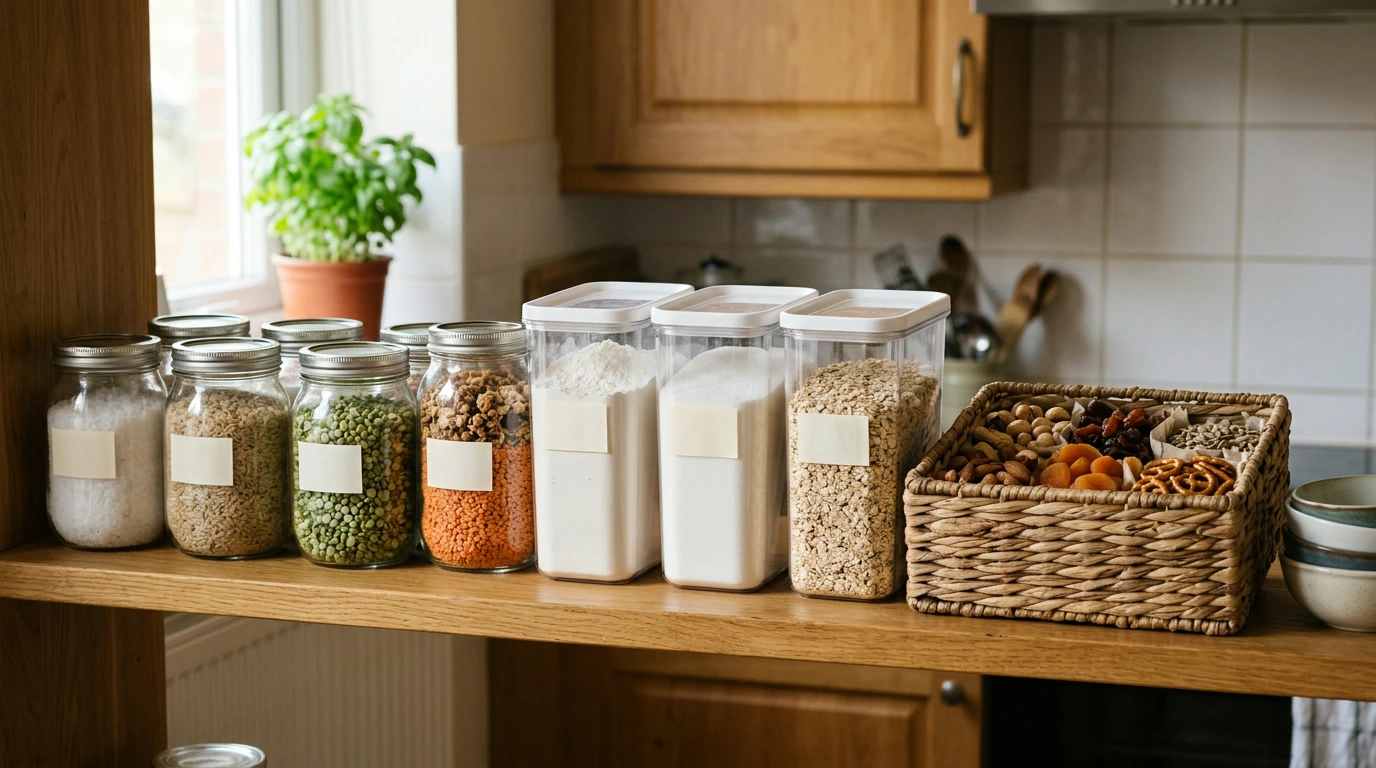
Labels make it easier to find what you need and put it back where it belongs. You don’t have to organize the whole house at once: a few clear categories in one well-used space can make your daily routine feel more manageable.
Our Organize Every Corner of Your Home Checklist is a printable digital guide for planning a more organized home. Use it alongside the ideas below to work through your storage areas one at a time.
Start With One Storage Area
Choose a space you use often and can reasonably sort in one session. A pantry shelf, bathroom drawer, or entryway basket is a good place to begin. Starting small gives you a chance to decide what works before applying the same approach elsewhere.
Take everything out of the chosen area and group similar belongings. You might separate baking ingredients from snacks, or spare toothpaste from everyday toiletries. Remove anything that belongs in another room, and set aside items you no longer need. Before returning the rest, choose a consistent home for each group.
Then label the containers, shelves, or designated spaces you have created. A label is most useful after you know what belongs in that spot; otherwise, you may have to redo it as soon as you finish sorting. Use our checklist to guide the process, then move on to another area when you’re ready.
Match Labels to the Way You Use Each Room
The best category names are the ones everyone in your household can understand. You might prefer “School snacks” to a broad “Food” label, or “Extra toiletries” instead of a list of every item in a bathroom bin. Choose words that make it clear what goes inside and where it should return after use.
Place each label where you can see it when the container is stored. A label on the front of a bin works well on an open shelf, while a label on top may be easier to read in a deep drawer. For baskets above eye level, position labels on the lower front edge so they remain visible.
Use these ideas as a starting point, and adjust the categories to fit your household and the space you have available.
| Area | Items to group | Example label |
|---|---|---|
| Kitchen | Baking ingredients | Baking supplies |
| Bathroom | Spare toiletries | Extra toiletries |
| Entryway | Seasonal accessories | Hats and gloves |
| Bedroom | Bed linens | Sheet sets |
| Utility area | Cleaning supplies | Cleaning cloths |
In the kitchen, labels can also help you keep track of when you opened or stored an item. For guidance on food storage times, consult the FoodKeeper App from FoodSafety.gov. A label is a helpful reminder, but it doesn’t replace safe food-handling practices.
Make Labels Easy to Read and Maintain
Keep wording short enough to read at a glance. Broad categories work for mixed bins, such as “Winter accessories,” while more specific labels help distinguish similar containers. If you store several sets of sheets together, for example, separate labels for “Queen sheets” and “Twin sheets” can save you from unfolding each set.
Choose a labeling method that suits both the container and its location. Removable labels are useful when a child’s supplies or seasonal contents may change. A tag tied to a basket can be swapped without leaving adhesive behind, while a shelf label can mark a permanent space for an item you regularly replenish.
Consider moisture and handling, too. In a bathroom or utility area, choose a label that can stand up to the conditions where it will be used. Keep the text large and legible, and avoid covering important manufacturer instructions on cleaning products or other original packaging.
When you reorganize, take a moment to review the label as well as the contents. If a bin marked “Hats and gloves” now holds only scarves, either update the label or return the missing items to their intended home. An accurate label makes the system easier for everyone to follow.
Use the Printable Guide to Keep Going
Once your first space is working, repeat the same steps in the next room: sort, assign a home, label, and revisit as needed. Our team recommends keeping the process flexible. A category that works for a small household today may need to change as routines, seasons, or storage needs change.
The Organize Every Corner of Your Home Checklist is available as a printable digital download for $3.99. It gives you a guide for planning home storage labels as you work from one area to the next.
For a related resource to help keep completed spaces in order, explore our storage maintenance checklist. A brief review of each area can help you catch misplaced items and outdated labels before clutter builds up again.
FAQ
What should I label first when organizing my home?
Start with a frequently used area, such as a pantry shelf or bathroom drawer. Label the groups you have already sorted into containers or designated spaces.
Should storage labels be broad or specific?
Use broad labels for mixed categories and more specific labels when they help distinguish similar containers. Choose wording that makes it easy to find items and return them to the right place.
Is the home labeling guide a physical product?
No. The Organize Every Corner of Your Home Checklist is a printable digital download, not a physical product.














Leave a comment