-
Shop
- Advanced Technologies
- Beauty
- Best-Sellers
- Car Accessories
- Dating & Social Skills
- Digital Resources
- AI & Technology
- AI Skills
- Car Buying & Ownership
- Cozy Feast Collection
- Electronics & Technology
- Emotional Intelligence
- Financial Education
- Hobbies
- Home Styling & Organization
- Kitchen & Recipes
- Mindfulness
- Mindset
- Online Business
- Parenting & Child Development
- Pet Lifestyle & Wellness
- Positive Thinking
- Productivity
- Self Confidence
- Sleep Improvement
- Smart Life with AI
- Stress Management & Relaxation
- Travel Planning
- Yoga & Fitness
- Yoga & Mind-Body Practices
- Education & Learning
- Family & Parenting
- Fashion
- Fashion Accessories
- Furniture
- Gadgets
- Health & Beauty
- Health & Wellness
- Home & Garden
- Home Supplies
- Kids & Babies
- Kitchen
- Kitchen Best-Sellers
- Lighting
- Patio, Lawn & Garden
- Personal Growth
- Personal Style & Fashion
- Pet Care
- Pet Supplies
- Pets
- Sport & Outdoors
- Super Deals
- TikTok Growth & Monetization Mastery
- Travel
- Wealth
- Wealth Building
- Budgeting & Saving
- Cryptocurrency Investing
- Debt Management
- Entrepreneurship & Business Growth
- Family Finance & Budgeting
- Financial Independence
- Financial Mindset & Psychology
- Financial Planning
- Frugal Living & Expense Hacks
- Goal Setting
- High-Income Skills
- Investing Basics
- Leadership
- Motivation
- Networking & Mentorship
- Passive Income Strategies
- Real Estate Investing
- Side Hustles
- Stock Market Investing
- Wellness
- Popular
- Best deals
AI Flight Planning for Northern Lights Trips (Less Risk)
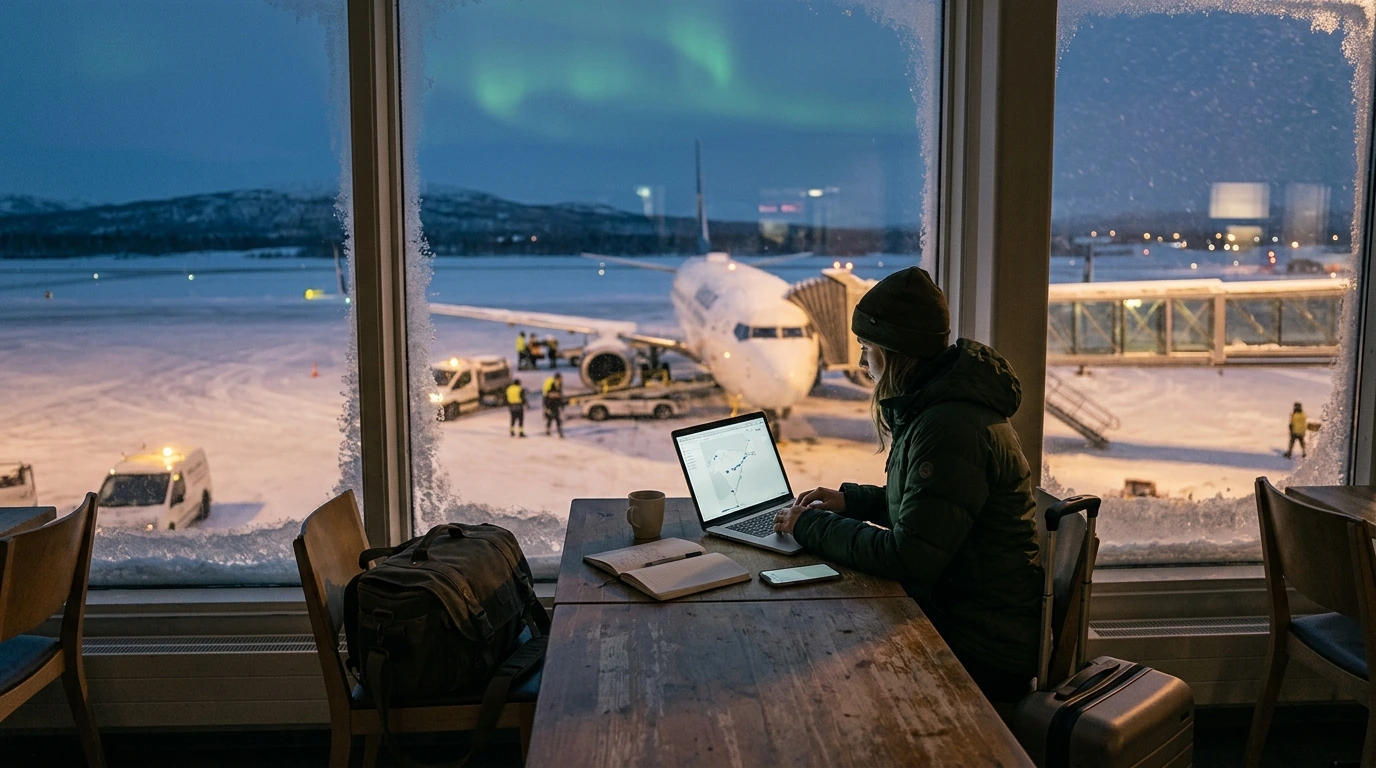
Book Smarter Flights for Northern Lights Adventures
Northern lights trips are won or lost long before the first night outside—especially at the flight-search stage. The best itineraries don’t just look cheap on a calendar; they protect your energy, preserve your first clear night, and give you options when winter weather disrupts schedules. Below is a practical, AI-assisted approach to picking destinations, timing flights around aurora-friendly windows, comparing routes and baggage trade-offs, and lowering the odds of arriving exhausted, late, or during a cloudy stretch.
Start with the flight reality: flexible dates beat perfect plans
Aurora chasing is a probability game. Locking into one “perfect weekend” often forces you into pricier fares, worse connections, and a higher chance of missing clear skies.
- Aim for a travel window, not a single fixed weekend; shifting by 24–72 hours can change both price and aurora odds.
- Prefer midweek departures/returns when possible to widen fare options and reduce connection stress.
- Build buffer days on arrival to handle delays and to catch at least one clear night.
- Treat flight selection as risk management: weather, darkness hours, and layover reliability matter as much as price.
Before you choose flights, confirm what drives visibility: solar activity plus darkness plus clear skies. NOAA’s aurora resources are a helpful reference point for understanding the space-weather side of the equation.
NOAA Space Weather Prediction Center — Aurora resources
Pick the best arrival airport for aurora chasing
The “best” gateway is often the one that lets you recover quickly from disruptions and reach dark skies without a marathon transfer.
- Compare gateway airports by: number of daily arrivals, typical winter delay patterns, onward transport options, and access to dark-sky areas.
- Look for airports with multiple airlines/routes so rebooking is easier if disruptions happen.
- Factor in ground transfer time to your viewing base (long transfers can erase the advantage of a cheaper flight).
- Consider a two-base strategy: fly into one region and depart from another if it reduces backtracking and opens more clear-sky chances.
Quick comparison checklist for choosing an aurora gateway
| Factor | What to look for | Why it matters for aurora trips |
|---|---|---|
| Route options | Multiple daily flights and more than one carrier | More resilience if flights cancel or you need to rebook |
| Connection risk | Short total travel time and fewer tight layovers | Late arrivals can cost the first clear night |
| Ground access | Reliable shuttles, rental cars, or trains | Less time in transit means more time under dark skies |
| Light pollution escape | Easy access to dark areas outside town | Higher chance of visible aurora and better photos |
| Weather variety nearby | Multiple microclimates within driving distance | Ability to “hunt” clearer skies on short notice |
Light pollution also matters more than many first-timers expect—especially for photography and for subtle aurora. The International Dark-Sky Association is a solid starting point for practical guidance on limiting the impact of artificial light.
International Dark-Sky Association — Light pollution guidance
Use AI to search flights like a strategist, not a bargain hunter
Good planning isn’t just “find the cheapest fare.” It’s identifying which itineraries keep you functional and flexible if anything goes sideways.
- Ask AI to generate a short list of routing patterns (nonstop vs. one-stop vs. two-stop) and rank them by reliability and recovery options.
- Have AI create date-shift scenarios (leave one day earlier, return two days later) and summarize the fare ranges you observe.
- Use AI to draft a checklist of must-avoid constraints: overly tight layovers, last-flight-of-the-day connections, airports prone to winter disruptions, and risky self-transfers.
- Keep one decision scorecard: price, total travel time, connection count, arrival time, baggage rules, and cancellation flexibility.
A useful mindset: assume at least one thing won’t go as planned. Your flights should still get you to the region in time for multiple nights under darkness—even if you lose half a day.
Timing choices that improve both aurora odds and comfort
- Target months with long dark nights (typically late fall through early spring in high-latitude regions) while balancing extreme cold and road conditions.
- Prioritize arriving before local evening to allow gear pickup, food, and a realistic first chase night.
- Avoid itineraries that land after midnight if you plan to drive immediately—fatigue is a bigger risk than missing a few dollars in savings.
- If your trip hinges on a narrow moon phase or a limited tour schedule, bake in extra flexibility on flights rather than squeezing layovers.
If you’re curious about the underlying science (and what can’t be controlled), NASA’s overview is a clear explanation of what causes auroras.
NASA — What causes the aurora?
Build a “disruption-proof” itinerary
What to pack and book around the flight: baggage, batteries, and camera gear
A simple flight decision workflow you can reuse
Digital guide to streamline AI-assisted flight planning
- Book Smarter Flights for Northern Lights Adventures — AI-Enhanced Aurora Travel Planning Guide (Digital Download)
- Versace Reversible Jacket with Iconic Barocco Pattern
FAQ
How many nights should a northern lights trip include to improve the chances of seeing aurora?
Aim for at least 4–7 nights if possible. Clouds and aurora activity vary a lot, and extra nights act like “insurance” so one bad forecast doesn’t wipe out the trip.
Is it better to book nonstop flights or allow a connection for northern lights trips?
Nonstop is usually the most reliable in winter, but a single connection can be fine if it’s on one ticket with a roomy layover. Avoid self-transfers and tight connections—saving money isn’t worth losing your first clear night.
What flight arrival time works best for aurora viewing?
Arriving in the afternoon or early evening is ideal so you can check in, eat, and rest before a night out. Late-night arrivals often increase fatigue and make it harder (and less safe) to drive or join a chase immediately.
















Leave a comment