-
Shop
- Advanced Technologies
- Beauty
- Best-Sellers
- Car Accessories
- Dating & Social Skills
- Digital Resources
- AI & Technology
- AI Skills
- Car Buying & Ownership
- Cozy Feast Collection
- Electronics & Technology
- Emotional Intelligence
- Financial Education
- Hobbies
- Home Styling & Organization
- Kitchen & Recipes
- Mindfulness
- Mindset
- Online Business
- Parenting & Child Development
- Pet Lifestyle & Wellness
- Positive Thinking
- Productivity
- Self Confidence
- Sleep Improvement
- Smart Life with AI
- Stress Management & Relaxation
- Travel Planning
- Yoga & Fitness
- Yoga & Mind-Body Practices
- Education & Learning
- Family & Parenting
- Fashion
- Fashion Accessories
- Furniture
- Gadgets
- Health & Beauty
- Health & Wellness
- Home & Garden
- Home Supplies
- Kids & Babies
- Kitchen
- Kitchen Best-Sellers
- Lighting
- Patio, Lawn & Garden
- Personal Growth
- Personal Style & Fashion
- Pet Care
- Pet Supplies
- Pets
- Sport & Outdoors
- Super Deals
- TikTok Growth & Monetization Mastery
- Travel
- Wealth
- Wealth Building
- Budgeting & Saving
- Cryptocurrency Investing
- Debt Management
- Entrepreneurship & Business Growth
- Family Finance & Budgeting
- Financial Independence
- Financial Mindset & Psychology
- Financial Planning
- Frugal Living & Expense Hacks
- Goal Setting
- High-Income Skills
- Investing Basics
- Leadership
- Motivation
- Networking & Mentorship
- Passive Income Strategies
- Real Estate Investing
- Side Hustles
- Stock Market Investing
- Wellness
- Popular
- Best deals
Adventure Planning Worksheet: Make Any Trip Actually Happen
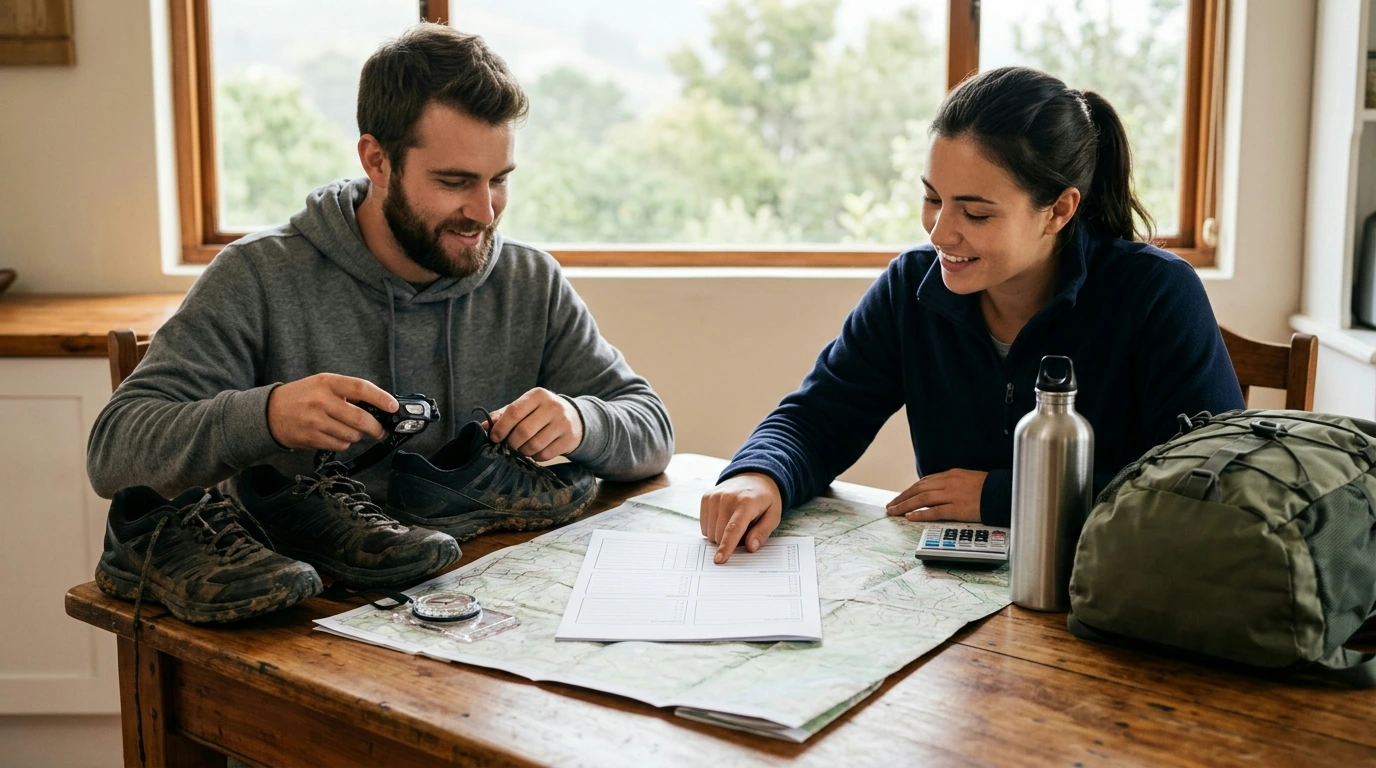
Adventure Planning Worksheet: Turn an Idea Into a Trip You Can Actually Do
A good adventure starts before the drive, flight, or first step on the trail. A worksheet-centered approach turns “We should go somewhere” into a plan you can follow under real-life conditions: limited time, shifting weather, tight budgets, different fitness levels, and the inevitable curveballs. When the basics are clear—where you’re going, what you’re doing, what it costs, who’s responsible for what, and what you’ll do if things change—you get more freedom during the trip, not less.
What an adventure plan needs (and what it doesn’t)
The best plans are specific where it counts and flexible where it helps. Start by defining the trip in one sentence: place, activity, and the reason it matters (the “why” keeps decisions simple when tradeoffs appear).
- Define the adventure in one sentence: “Two-day hike in Shenandoah to see a sunrise viewpoint.”
- Set a realistic time box first: half-day, weekend, or one week—then choose extras.
- Pick an honest difficulty level: match fitness, experience, and group comfort.
- Decide non-negotiables: a must-see spot, a sunrise start, a budget cap, or a kid-friendly pace.
- Skip over-planning: leave flexible blocks for weather, detours, and slower-than-expected travel.
What you don’t need: a minute-by-minute schedule, a 40-item gourmet menu, or a route so rigid that one road closure ruins everything.
Use the worksheet to go from dream to doable
A worksheet works because it forces the right decisions in the right order. Start with constraints, then add details that protect time, money, and safety.
- Start with destination + constraints: distance, season, permits, and accessibility.
- Map the basics: transport, lodging/camping, route, and daily pacing.
- Do a quick risk check: weather, terrain, wildlife, water, and communication coverage.
- Add a backup plan: alternate trail, indoor option, or earlier turnaround time.
- Review for “done is better than perfect”: confirm only the items that protect safety, budget, and time.
If you want a ready-to-fill format that keeps everything in one place, the Adventure Planning Worksheet is designed for day trips, weekends, and multi-stop outings where clarity prevents last-minute stress.
Build a budget and timeline that won’t collapse
Most trip frustration comes from two surprises: costs you forgot to account for and timelines that ignore reality. Solve both with a three-column estimate and a timeline that respects daylight and check-in windows.
- List every cost category: transport, fuel/parking, food, lodging, permits, gear rentals, and an emergency buffer.
- Estimate low/likely/high totals: even a rough range prevents “How did we spend that much?” moments.
- Create a timeline with real constraints: travel time, check-in windows, and available daylight.
- Plan decision points: when to turn back, when to resupply, when to call it.
- Assign responsibilities: navigation, meals, reservations, and first aid—especially with groups.
| Planning item | Best-case | Likely | Fallback |
|---|---|---|---|
| Weather | Clear skies | Mixed clouds/wind | Storm plan + shorter route |
| Food | Pack lunches | One meal out | Easy snacks + early dinner option |
| Transport | Direct drive | Traffic delays | Leave earlier + alternate route |
| Budget | Under cap | Near cap | Cut one paid activity |
For family or group trips, it also helps to plan the “people side”: who gets cranky when hungry, who needs more breaks, and what makes the day feel calm. If you’re traveling with kids, the digital download Understanding Attachment Theory for Parents – A Practical Parenting Guide (Digital Download) can be a useful companion for building routines and expectations that reduce conflict on the road.
Packing and prep: bring less, cover the essentials
Packing is easier when you plan for conditions instead of wishful thinking. Start with the forecast range (not just the high) and the terrain you’ll actually be on.
- Pack for conditions, not aspirations: temperature swings, wind, rain, and footing.
- Separate essentials from nice-to-haves: confirm essentials twice.
- Add a small comfort kit: hot drink option, dry socks, blister care—tiny weight, big morale.
- Prep documentation and access: IDs, reservations, offline maps, permits, park passes.
- Do a 10-minute pre-departure check: water, power/chargers, first aid, keys, emergency contacts.
Safety and stewardship checkpoints
Helpful references: the Leave No Trace 7 Principles, the National Park Service planning guidance, and CDC Travelers’ Health for health considerations by destination.
Make the experience memorable (without forcing it)
Adventure Planning Worksheet: a ready-to-use planning template
If you prefer a structured format you can reuse, the Adventure Planning Worksheet organizes the details that matter—destination, timing, budget, packing, and contingencies—without turning planning into a second job.
FAQ
How far in advance should an adventure plan be completed?
For a same-day or local outing, a plan can be done the night before (or even the morning of) as long as weather and access are confirmed. For a weekend trip, aim for 3–7 days ahead so you can book lodging and check trail or road conditions. For multi-day trips, start 2–8 weeks ahead, especially if permits, peak-season reservations, or seasonal closures are factors.
What should be included in a simple adventure worksheet?
Include the destination, dates/times, route or key stops, transportation and lodging, a basic budget, a short packing essentials list, emergency contacts, and any safety notes (weather, water, navigation). Add a clear backup plan and one or two decision points (like a turnaround time) so the group knows what happens if conditions change.
How do you plan for bad weather without cancelling the trip?
Set thresholds in advance (for wind, rain, temperature, or lightning risk) that automatically trigger a shorter route or different activity. Identify alternate trails, lower-elevation options, or an indoor backup, and write down a firm turnaround time plus the nearest shelter points. Pack the minimum weather protection needed so “uncomfortable” doesn’t become “unsafe.”














Leave a comment