-
Shop
- Advanced Technologies
- Beauty
- Best-Sellers
- Car Accessories
- Dating & Social Skills
- Digital Resources
- AI & Technology
- AI Skills
- Car Buying & Ownership
- Cozy Feast Collection
- Electronics & Technology
- Emotional Intelligence
- Financial Education
- Hobbies
- Home Styling & Organization
- Kitchen & Recipes
- Mindfulness
- Mindset
- Online Business
- Parenting & Child Development
- Pet Lifestyle & Wellness
- Positive Thinking
- Productivity
- Self Confidence
- Sleep Improvement
- Smart Life with AI
- Stress Management & Relaxation
- Travel Planning
- Yoga & Fitness
- Yoga & Mind-Body Practices
- Education & Learning
- Family & Parenting
- Fashion
- Fashion Accessories
- Furniture
- Gadgets
- Health & Beauty
- Health & Wellness
- Home & Garden
- Home Supplies
- Kids & Babies
- Kitchen
- Lighting
- Patio, Lawn & Garden
- Personal Growth
- Personal Style & Fashion
- Pet Care
- Pet Supplies
- Pets
- Sport & Outdoors
- Super Deals
- TikTok Growth & Monetization Mastery
- Travel
- Wealth
- Wealth Building
- Budgeting & Saving
- Cryptocurrency Investing
- Debt Management
- Entrepreneurship & Business Growth
- Family Finance & Budgeting
- Financial Independence
- Financial Mindset & Psychology
- Financial Planning
- Frugal Living & Expense Hacks
- Goal Setting
- High-Income Skills
- Investing Basics
- Leadership
- Motivation
- Networking & Mentorship
- Passive Income Strategies
- Real Estate Investing
- Side Hustles
- Stock Market Investing
- Wellness
- Popular
- Best deals
500 lb Adjustable Dip Bar Station for Home Workouts
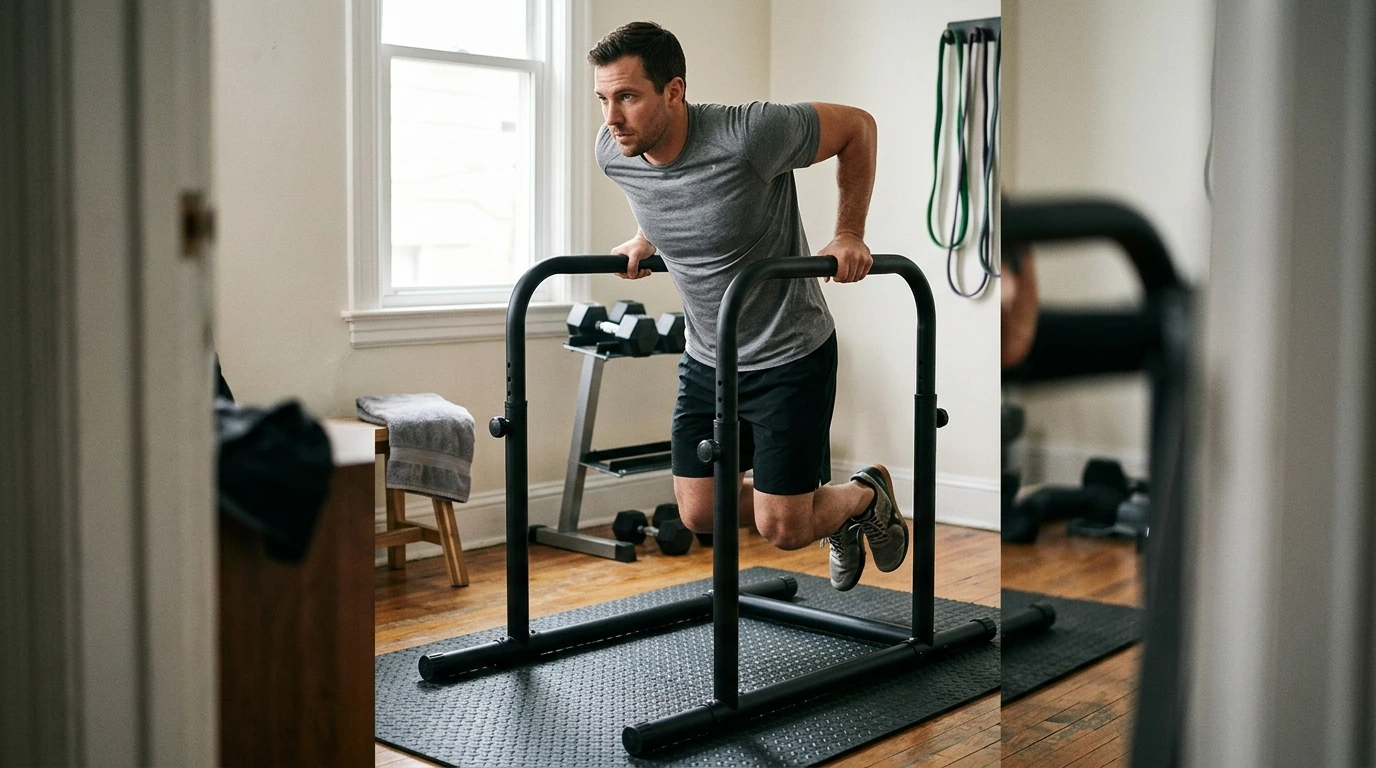
Adjustable Heavy Duty Dip Bar Station (500 lbs) for Stronger Home Training
A stable dip setup turns bodyweight moves into a full upper-body strength session—without committing to a full power tower. An adjustable heavy duty dip bar station rated for 500 lbs is built to stay planted during dips, L-sits, and push-up variations, while still fitting into smaller home gym spaces. Below are the practical features that matter, a quick buying snapshot, set-up and safety tips, and a simple routine you can repeat week after week. For more guidance, see 2026 Act Fast Dip Stands.
What a Dip Bar Station Adds to a Home Gym
Dip bars punch above their footprint. With a pair of parallel handles and a stable base, you can train multiple muscle groups with the same movement pattern and then progress it over time. For further reading, see Power Tower Dip Station Pull Up Bar for Home Gym ….
- Upper-body compound pressing: Dips hit chest, triceps, and shoulders while demanding full-body tension.
- Scalable difficulty: Start with assisted reps (feet on the floor or a band), move to full bodyweight, then add load with a belt or vest.
- More than dips: Use the bars for incline/decline push-ups, support holds, scapular depressions, L-sit tucks, and core work if your setup allows.
- Space-friendly strength: Many stations store more easily than a full-size tower, making them realistic for apartments and shared spaces.
Key Features to Look For in an Adjustable Heavy Duty Station
Capacity rating and frame design
A higher listed capacity often signals thicker steel, sturdier joints, and a more confidence-inspiring base. Still, follow the manufacturer’s guidance for dynamic use—fast reps, kipping, or dropping into the bottom can create forces that exceed a simple “static” number.
Adjustability (height and width)
Being able to change height and width helps you find a shoulder-friendly groove. Small changes can reduce elbow flare, improve range of motion, and make support holds feel more secure.
Base stability and feet
Look for a wider footprint and non-slip feet to reduce rocking on tile, hardwood, or concrete. If your floor is slick, a rubber mat increases friction and protects surfaces.
Grip comfort
Textured or padded handles can reduce slipping when your hands get sweaty and may feel better on wrists during longer sets. Also consider handle diameter—too thick can fatigue the forearms early, too thin can feel harsh under load.
Assembly and footprint
Confirm assembled dimensions before you buy and check whether it folds or separates for storage. For small rooms, the ability to slide it under a bed or into a closet can be the difference between using it daily and ignoring it.
Quick Specs and Buying Snapshot
A fast side-by-side view makes it easier to confirm the essentials before ordering. Also check floor type compatibility (tile/wood/carpet) and plan on a mat if you need extra grip.
| Feature | What to check | Why it matters |
|---|---|---|
| Weight capacity | Up to 500 lbs rating | Supports heavier users and added load when training progresses |
| Adjustability | Height/width settings | Helps dial in shoulder-friendly positioning and exercise variety |
| Stability | Wide base + non-slip feet | Reduces tipping and shifting during reps |
| Grip | Handle diameter/texture/padding | Improves control and comfort on longer sets |
| Space | Footprint and storage method | Fits home layouts and simplifies cleanup |
Recommended Product: Adjustable Heavy Duty Dip Bar Station – 500lbs Capacity
If you want a straightforward, home-ready station with a high stated capacity, the Adjustable Heavy Duty Dip Bar Station – 500lbs Capacity for Home Workouts is built for dips, support holds, and push-up variations with an adjustable setup for better positioning.
- High stated capacity (500 lbs): Useful for confident progressive training, including weighted variations once form is consistent.
- Routine-friendly: Pairs well with simple programming—dips plus rows/bands plus core work for balanced development.
- Best practice: Place it on a flat surface; add a rubber mat if your floor is slippery.
Optional add-on for consistency
If you like having a printable system to stay on track week to week, the Ultimate Employee Motivation Checklist (Printable PDF Download) can be repurposed as a simple habit-and-accountability checklist for training sessions, recovery, and weekly goals.
Set-Up and Safety Checklist for Heavy Duty Dips
- Assemble fully: Tighten all bolts and re-check fasteners after the first few sessions since vibration can loosen hardware.
- Test stability before each workout: Apply downward pressure and a gentle side-to-side shake to confirm it stays planted.
- Keep wrists neutral: Grip firmly, set shoulders down and back, and avoid excessive elbow flare.
- Start with partial range if needed: Increase depth only if it’s pain-free and controlled; shoulders should feel stable at the bottom.
- Avoid swinging early: Kipping or bouncing increases stress on joints and the frame—earn smooth control first.
Training Ideas: A Simple Weekly Routine (Progressive and Joint-Friendly)
Day A (push focus)
Day B (core + holds)
Day C (strength balance)
Progression and rest
Common Mistakes That Reduce Results (and How to Fix Them)
FAQ
Is a 500 lb capacity dip station safe for weighted dips?
A 500 lb rating suggests strong structural capacity, but safe weighted dips also depend on correct assembly, stable flooring, and controlled movement. Dynamic forces from bouncing or swinging can exceed static loads, so follow the manufacturer’s guidance and progress gradually.
How wide should dip bars be set for shoulder comfort?
Start near shoulder-width and adjust until your elbows track comfortably without excessive flare. A slightly narrower setting often feels better for many users, especially if shoulders feel pinched at the bottom.
What exercises can be done besides dips?
Common options include incline/decline push-ups, support holds, L-sit or tuck holds, scapular depressions, and (if your station setup allows) slow knee raises between the bars.
Recommended for you


Auto-Empty Robot Vacuum (5000Pa): Setup, Tips & FAQs
Sep 12, 2026













Leave a comment