-
Shop
- Advanced Technologies
- Beauty
- Best-Sellers
- Car Accessories
- Dating & Social Skills
- Digital Resources
- AI & Technology
- AI Skills
- Car Buying & Ownership
- Cozy Feast Collection
- Electronics & Technology
- Emotional Intelligence
- Financial Education
- Hobbies
- Home Styling & Organization
- Kitchen & Recipes
- Mindfulness
- Mindset
- Online Business
- Parenting & Child Development
- Pet Lifestyle & Wellness
- Positive Thinking
- Productivity
- Self Confidence
- Sleep Improvement
- Smart Life with AI
- Stress Management & Relaxation
- Travel Planning
- Yoga & Fitness
- Yoga & Mind-Body Practices
- Education & Learning
- Family & Parenting
- Fashion
- Fashion Accessories
- Furniture
- Gadgets
- Health & Beauty
- Health & Wellness
- Home & Garden
- Home Supplies
- Kids & Babies
- Kitchen
- Kitchen Best-Sellers
- Lighting
- Patio, Lawn & Garden
- Personal Growth
- Personal Style & Fashion
- Pet Care
- Pet Supplies
- Pets
- Sport & Outdoors
- Super Deals
- TikTok Growth & Monetization Mastery
- Travel
- Wealth
- Wealth Building
- Budgeting & Saving
- Cryptocurrency Investing
- Debt Management
- Entrepreneurship & Business Growth
- Family Finance & Budgeting
- Financial Independence
- Financial Mindset & Psychology
- Financial Planning
- Frugal Living & Expense Hacks
- Goal Setting
- High-Income Skills
- Investing Basics
- Leadership
- Motivation
- Networking & Mentorship
- Passive Income Strategies
- Real Estate Investing
- Side Hustles
- Stock Market Investing
- Wellness
- Popular
- Best deals
Stress-Free Road Trips With Kids: A Simple Repeatable System
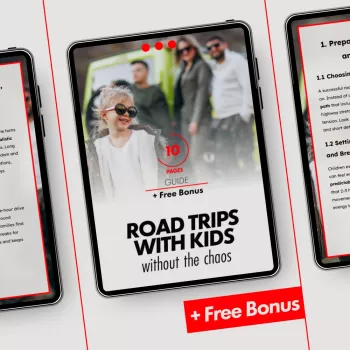
Road Trips With Kids Without the Chaos: A Simple System You Can Reuse
Family road trips can be the best kind of together time—when the car is stocked, the schedule is realistic, and the “what if” moments already have a plan. Our team uses a straightforward, parent-friendly system to keep everyone fed, entertained, comfortable, and calm from driveway to destination—without overpacking, over-scheduling, or overthinking.
If you want a ready-to-use playbook you can print and repeat, we put it all together in Road Trips With Kids Without the Chaos: The Ultimate Guide for Planning a Stress-Free Family Adventure.
Start with a trip plan that fits real kids (not the fantasy version)
Planning gets easier when you accept one truth: the goal isn’t maximum miles—it’s minimum meltdowns.
- Pick a daily driving limit based on attention spans. Toddlers often do best with shorter blocks and earlier stops. Older kids can usually handle longer stretches as long as breaks are predictable.
- Choose 1–2 must-do moments per day. Keep the rest flexible so detours feel like a bonus, not a threat to the plan.
- Build a buffer. Meals, bathrooms, playground breaks, traffic, and “I can’t find my shoe” moments all take time. Arriving calmer beats arriving on the dot.
- Decide what matters most: scenic, fastest, or easiest. “Easiest” often means more rest areas and simpler exits.
- Align expectations before you leave. Talk through car rules, screen rules, and how requests will be handled (“Next stop in 20 minutes”).
Pack for comfort and containment (the calm is in the car setup)
A good car setup reduces the number of times you have to solve problems while driving. We like “zones” and “reach rules”: what must be accessible stays accessible.
- Create a car zone for each child. A small tote/organizer with snacks, water, wipes, activities, and a trash bag prevents constant passing-back-and-forth.
- Plan layers for temperature swings. A lightweight blanket, hoodie, and extra socks can eliminate a surprising number of complaints.
- Contain the mess. Use a dedicated trash container and a small spill kit (paper towels, wipes, stain remover pen).
- Keep a quick-change kit within reach. One full outfit per child, plus a bag for dirty clothes, saves you from digging through luggage on the shoulder.
- Keep key items accessible. Medications, chargers, hand sanitizer, tissues, and first-aid basics should never be buried under suitcases.
- Use categories. Split “in-car essentials” from “destination luggage” so you stop opening the trunk for every small need.
In-Car Essentials vs. Trunk Items (Pack Once, Reach Often)
| Category | Keep Within Reach | Stays in Trunk |
|---|---|---|
| Comfort | Small blanket, hoodie, favorite small toy | Extra blankets, bulky pillows |
| Food & Drink | Water bottles, spill-proof cups, snacks for 2–3 hours | Cooler refills, backup snacks |
| Hygiene | Wipes, hand sanitizer, tissues | Extra diapers/pull-ups, bulk paper goods |
| Safety | First-aid basics, any urgent meds | Non-urgent supplies, duplicates |
| Clean-up | Trash bag/can, paper towels | Extra trash bags, larger cleaning kit |
| Entertainment | Activity pouch, headphones | Extra books/toys rotation |
Snacks and meals that prevent meltdowns (without constant grazing)
Food can either stabilize the whole car or turn the day into a never-ending snack negotiation. A simple rhythm works best.
Entertainment that doesn’t depend on a screen (and doesn’t explode into chaos)
Stops, sleep, and the schedule that keeps everyone regulated
When things go sideways: a calm-response plan for common road trip moments
Use the guide as a trip playbook (printable, repeatable, and easy to personalize)
Once you build a reusable system—packing categories, snack rhythm, stop routine—future trips take a fraction of the effort. That’s exactly why our team designed Road Trips With Kids Without the Chaos: The Ultimate Guide for Planning a Stress-Free Family Adventure as a practical, repeatable playbook you can adapt to your kids’ ages and temperament.
If you’re also working on smoother transitions and cooperation outside the car, Understanding Attachment Theory for Parents (Digital Download) pairs well with trip planning because predictable routines and calm boundaries tend to land better when connection is already prioritized.
One more non-negotiable: safety comes first. If you need a quick refresher on car seats/boosters and best practices, the CDC’s child passenger safety guidance and the NHTSA car seat resource are solid, parent-friendly references.
FAQ
How many hours should kids be in the car each day on a road trip?
For many families, 4–6 hours of driving per day (split into blocks) works well with young kids, while older kids may tolerate 6–8 with good breaks. Plan stops every 1–2 hours and set a daily hard stop time so you’re not pushing into the meltdown zone.
What are the best road trip snacks for kids that won’t make a mess?
Choose low-crumb, easy-grab options like cheese sticks, yogurt pouches, sliced fruit, veggies with dip, pita wedges, and trail mix suited to your child’s age. Pre-portion everything, keep a dedicated trash container up front, and offer most water at stops to cut down on spills and constant bathroom requests.
How do you stop sibling fighting in the car?
Reduce stimulation first (lower volume, fewer items out), then switch to shared audio like an audiobook to reset the mood. Reinforce simple car rules, separate zones/items when possible, and use a timed 5–10 minute quiet reset before returning to normal conversation.
Recommended for you



What is the best skin care routine for winter?
Oct 19, 2026













Leave a comment