-
Shop
- Advanced Technologies
- Beauty
- Best-Sellers
- Car Accessories
- Dating & Social Skills
- Digital Resources
- AI & Technology
- AI Skills
- Car Buying & Ownership
- Cozy Feast Collection
- Electronics & Technology
- Emotional Intelligence
- Financial Education
- Hobbies
- Home Styling & Organization
- Kitchen & Recipes
- Mindfulness
- Mindset
- Online Business
- Parenting & Child Development
- Pet Lifestyle & Wellness
- Positive Thinking
- Productivity
- Self Confidence
- Sleep Improvement
- Smart Life with AI
- Stress Management & Relaxation
- Travel Planning
- Yoga & Fitness
- Yoga & Mind-Body Practices
- Education & Learning
- Family & Parenting
- Fashion
- Fashion Accessories
- Furniture
- Gadgets
- Health & Beauty
- Health & Wellness
- Home & Garden
- Home Supplies
- Kids & Babies
- Kitchen
- Kitchen Best-Sellers
- Lighting
- Patio, Lawn & Garden
- Personal Growth
- Personal Style & Fashion
- Pet Care
- Pet Supplies
- Pets
- Sport & Outdoors
- Super Deals
- TikTok Growth & Monetization Mastery
- Travel
- Wealth
- Wealth Building
- Budgeting & Saving
- Cryptocurrency Investing
- Debt Management
- Entrepreneurship & Business Growth
- Family Finance & Budgeting
- Financial Independence
- Financial Mindset & Psychology
- Financial Planning
- Frugal Living & Expense Hacks
- Goal Setting
- High-Income Skills
- Investing Basics
- Leadership
- Motivation
- Networking & Mentorship
- Passive Income Strategies
- Real Estate Investing
- Side Hustles
- Stock Market Investing
- Wellness
- Popular
- Best deals
43-Inch Espresso Vanity: White Quartz Top, Smart Storage
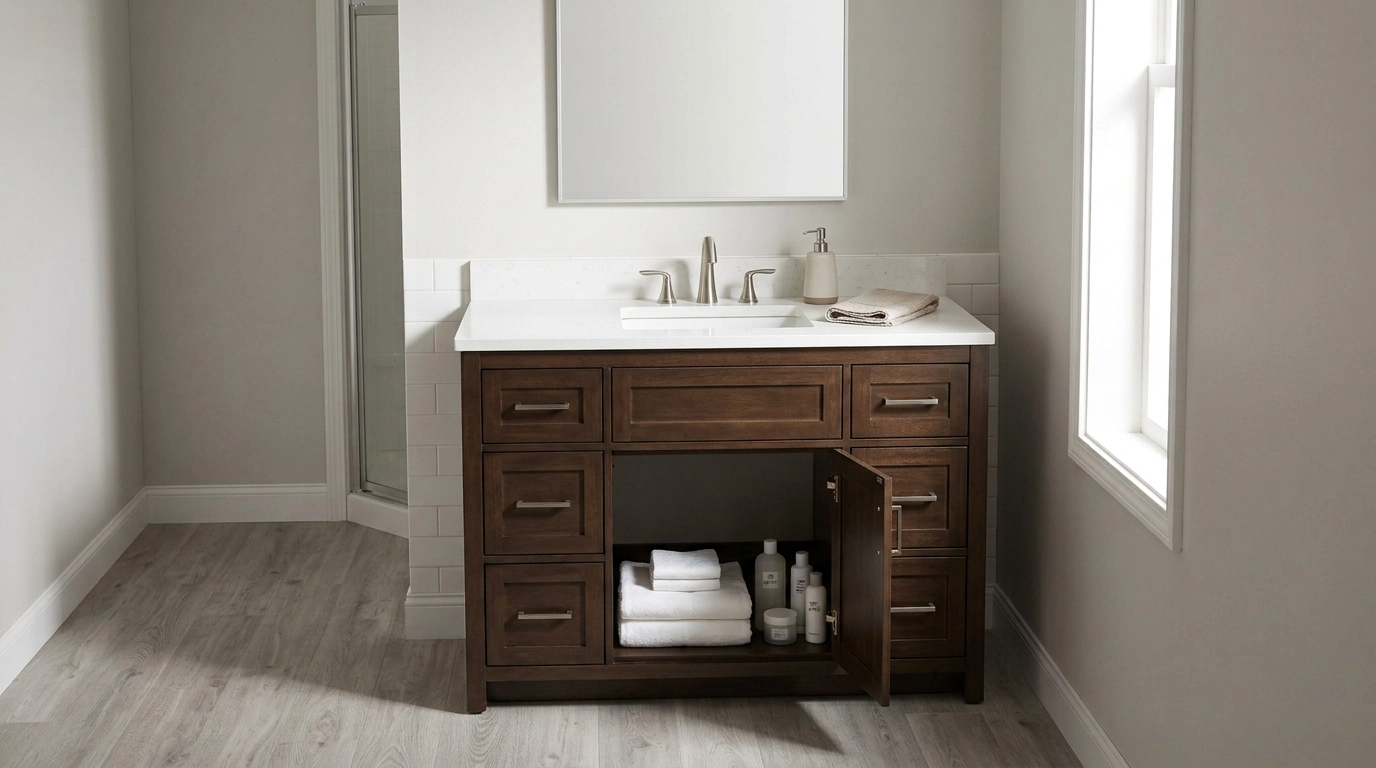
43″ Espresso Bathroom Vanity with Pure White Quartz Countertop and Ample Storage
A 43-inch vanity is a practical midpoint for many bathrooms—large enough for meaningful drawer and cabinet space, yet compact enough to keep walkways clear. The espresso finish adds depth and contrast, while a pure white quartz countertop brings a clean, bright surface that’s easy to live with. This guide focuses on fit, storage function, countertop performance, and the everyday details that matter after installation.
Why a 43-inch vanity works in real bathrooms
A 43-inch footprint often lands in the “sweet spot” between tight powder-room sizes and wide double-sink builds. It gives a comfortable amount of counter to set down daily items without turning the room into an obstacle course.
- Balances countertop room and floor clearance, especially in standard full baths and larger powder rooms.
- Provides storage capacity that smaller vanities often lack, helping reduce counter clutter.
- Creates visual weight that anchors the room, particularly when paired with a bright top and light wall color.
- Pairs well with common mirror sizes without overwhelming the wall.
For comfort, many designers reference broader bathroom planning standards from organizations like the National Kitchen & Bath Association (NKBA), then adjust based on door swings, drawers that need to open fully, and how people actually move through the room.
Espresso finish: what it adds to the room
Espresso is a deep brown that reads warm and intentional—especially when it’s contrasted with a white countertop. It can feel modern, transitional, or more classic depending on the supporting details you choose.
- Deep espresso tones bring contrast against white tile, light paint, and chrome or brushed nickel hardware.
- Works across styles—from modern transitional to more classic looks—depending on faucet and lighting choices.
- Helps visually “ground” a bathroom with lots of pale surfaces, making the space feel more intentional.
- Pairs well with warm lighting (2700K–3000K) to avoid the finish reading too cool or flat.
Color pairings that complement espresso + white quartz
| Element | Recommended options | Effect |
|---|---|---|
| Wall paint | Soft white, warm greige, pale taupe | Keeps contrast without harshness |
| Tile | White subway, marble-look porcelain, light concrete-look | Clean and timeless background |
| Hardware | Brushed nickel, matte black, champagne bronze | Modernizes the look and adds definition |
| Textiles | White + sand, charcoal accents | Crisp, hotel-like finish |
Pure white quartz countertop: durability and daily care
Quartz is popular in bathrooms because it’s non-porous and designed to be low maintenance. It stands up well to the kinds of messes bathrooms create—soap residue, cosmetics, toothpaste splatter—when it’s cleaned routinely.
- Quartz resists staining from common bathroom items like cosmetics and soap when cleaned routinely.
- Non-porous surface supports simple maintenance—wipe with mild soap and water; avoid abrasive pads.
- Use trivets for hot tools (curling irons, straighteners) to reduce risk of thermal shock.
- Wipe standing water at seams and around the faucet to keep the surface and caulk line looking crisp.
- Choose a neutral, mildew-resistant silicone for sink and backsplash joints when sealing.
For material-specific guidance, the Engineered Stone Institute — Care and Maintenance resource is a helpful reference point for do’s and don’ts with engineered stone surfaces.
Storage that stays functional: drawers, cabinets, and organization
Storage only helps if it stays usable day to day. A 43-inch vanity size typically supports a more practical division: easy-access zones for what you use daily, plus deeper storage for backstock and cleaning supplies.
- Prioritize keeping daily-use items in the most accessible zones to minimize countertop buildup.
- Use slim bins or drawer dividers for grooming tools, skincare, and first-aid items.
- Reserve lower cabinet space for bulk items (extra paper goods, cleaning supplies) to keep drawers lighter.
- Add a small tray near the sink for frequently used items to keep water off the rest of the counter.
- Consider child-safe latches or soft-close accessories if the bathroom is shared with kids.
One overlooked detail: air quality. Storing cleaners and extra toiletries under the sink is convenient, but ventilation matters—especially in humid bathrooms. The U.S. Environmental Protection Agency (EPA) — Indoor Air Quality guidance is a practical reminder to run exhaust fans and minimize moisture buildup to help discourage odors and mildew.
Fit and planning checklist before ordering
Quick planning checklist for a 43-inch vanity
| What to measure/confirm | Target/notes | Common mistakes to avoid |
|---|---|---|
| Overall width | 43-inch class size | Ordering before measuring trim/baseboards |
| Front clearance | Comfortable walking space | Blocking door swing or tight traffic flow |
| Plumbing rough-in | Supply and drain alignment | Assuming centered plumbing in older homes |
| Mirror size | Proportional to vanity | Mirror too narrow or oversized for lighting layout |
Installation and finishing touches
Product options (in stock)
- 43″ Espresso Bathroom Vanity with Pure White Quartz Countertop and Ample Storage — a balanced size for everyday comfort, with a high-contrast look that suits both modern and classic bathrooms.
- The Ultimate Employee Motivation Checklist: Spark Your Team’s Drive in 7 Easy Steps! | Printable PDF Download — a printable checklist format that can be handy for keeping any home project tasks organized.
FAQ
Does a pure white quartz countertop require sealing?
No—quartz is non-porous and typically doesn’t require sealing. For best results, clean routinely with mild soap and water, avoid abrasive pads, and keep high heat (like hot tools) off the surface.
Is 43 inches wide enough for a shared bathroom?
It can be, especially if storage is organized so daily items stay off the counter. Pay attention to sink size, mirror/lighting coverage, and front clearance so two people can use the space without crowding.
How should an espresso vanity be styled so the bathroom doesn’t feel too dark?
Use light walls and tile, warm lighting, and reflective surfaces like a large mirror to bounce light around the room. Keeping the countertop mostly clear and choosing brighter hardware finishes can also prevent the space from feeling heavy.
Recommended for you
Clear Kitchen Counters That Stay Clutter-Free
Sep 22, 2026
Hexagonal Stainless Portable Charcoal Grill Guide
Sep 22, 2026









Leave a comment