-
Shop
- Advanced Technologies
- Beauty
- Best-Sellers
- Car Accessories
- Dating & Social Skills
- Digital Resources
- AI & Technology
- AI Skills
- Car Buying & Ownership
- Cozy Feast Collection
- Electronics & Technology
- Emotional Intelligence
- Financial Education
- Hobbies
- Home Styling & Organization
- Kitchen & Recipes
- Mindfulness
- Mindset
- Online Business
- Parenting & Child Development
- Pet Lifestyle & Wellness
- Positive Thinking
- Productivity
- Self Confidence
- Sleep Improvement
- Smart Life with AI
- Stress Management & Relaxation
- Travel Planning
- Yoga & Fitness
- Yoga & Mind-Body Practices
- Education & Learning
- Family & Parenting
- Fashion
- Fashion Accessories
- Furniture
- Gadgets
- Health & Beauty
- Health & Wellness
- Home & Garden
- Home Supplies
- Kids & Babies
- Kitchen
- Kitchen Best-Sellers
- Lighting
- Patio, Lawn & Garden
- Personal Growth
- Personal Style & Fashion
- Pet Care
- Pet Supplies
- Pets
- Sport & Outdoors
- Super Deals
- TikTok Growth & Monetization Mastery
- Travel
- Wealth
- Wealth Building
- Budgeting & Saving
- Cryptocurrency Investing
- Debt Management
- Entrepreneurship & Business Growth
- Family Finance & Budgeting
- Financial Independence
- Financial Mindset & Psychology
- Financial Planning
- Frugal Living & Expense Hacks
- Goal Setting
- High-Income Skills
- Investing Basics
- Leadership
- Motivation
- Networking & Mentorship
- Passive Income Strategies
- Real Estate Investing
- Side Hustles
- Stock Market Investing
- Wellness
- Popular
- Best deals
700W Portable Solar Power Station: Plan Your Backup
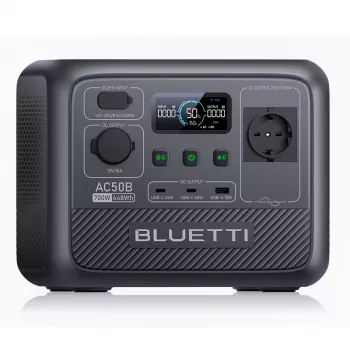
A portable power station can make an outage or an off-grid day more manageable, but a useful backup plan starts with the devices you need to run. Our Portable Solar Power Station 700W gives you a starting point for comparing power demands, runtime needs, and charging options. Before you head to a campsite or count on backup power at home, take a few minutes to build a device list.
Start with the devices that matter most
During an outage, your priorities might be a charged phone and enough light to move around safely. At a campsite, you might add a rechargeable lantern or another small essential. Write down those must-haves first, then consider optional comforts. This keeps your plan centered on what matters if stored energy runs low.
Two measurements help you make that list useful. Watts describe how much power a device draws at a given moment. Watt-hours estimate how much energy it uses over time: multiply its running watts by the number of hours you plan to use it. The “700W” in a product title is not a battery-capacity figure, and it cannot tell you runtime by itself.
Look for each device’s running wattage on its label or in its manual. If an appliance has a motor or compressor, it may draw extra power when starting. Verify its starting requirements and the station’s output specifications before connecting it; a running-wattage calculation alone may not establish compatibility.
A simple device-planning worksheet
| Device | Running watts | Hours needed | Estimated watt-hours |
|---|---|---|---|
| Phone charger | Check charger label | Enter planned hours | Watts × hours |
| LED light | Check light label | Enter planned hours | Watts × hours |
| Other essential | Check device label | Enter planned hours | Watts × hours |
Make a separate row for every device you expect to use. If two devices must run at once, consider their combined power draw as well as their total energy use. You can revise the hours later, but an initial estimate makes it easier to spot the devices that will use the most energy.
Match the station to your backup-power plan
Our featured station is a place to begin comparing your list with a real product. Add the estimated watt-hours for your essentials, then leave room for conversion losses and plans that change. For example, you may use a light longer than expected or need to recharge a phone more often during an extended outage. Your worksheet is a planning tool, not a runtime guarantee.
To estimate runtime reliably, you also need the station’s battery capacity and output specifications. Compare those figures with both your total energy estimate and the wattage of devices that will run together. Before buying, confirm that the available outlets suit your devices, that the charging inputs suit your intended setup, and that the manufacturer’s instructions allow the uses you have planned. Do not assume a solar panel or a particular charging cable is included.
Power equipment is only one part of household readiness. Alongside your device worksheet, decide where you will keep flashlights, instructions, and contact information. If you are preparing with children, our practical parenting guide on attachment theory is a separate resource for thinking about family support; it is not a substitute for an outage plan or equipment instructions. For broader preparedness steps, see Ready.gov’s power outage guidance.
Make solar charging part of the plan
Solar charging can help when grid power is unavailable, but it works within practical limits. You need compatible equipment, and the energy a panel collects depends on sunlight, weather, and placement. Shade or a poorly positioned panel can change the result substantially. Treat any anticipated solar recharge as part of your plan, not as a promise that the station will refill by a certain hour.
Before choosing a panel, confirm the station’s supported solar-input requirements and compare them with the panel’s connector and electrical ratings. An advertised panel wattage alone does not establish compatibility or guarantee a charging time. The U.S. Department of Energy’s solar energy basics offers useful background on how sunlight is converted to electricity.
Charge the station ahead of a trip or forecast outage when you have access to a suitable power source. Starting with stored energy gives you more flexibility if the first day is cloudy, your campsite is shaded, or you need power before a panel can produce a useful charge.
Keep your setup practical and safe
A short test is more valuable than discovering a mismatch when you need power. Charge the station, inspect cables for damage, and try the devices you expect to use under appropriate conditions. Keep the instructions accessible so you can confirm operating limits and respond to any warnings. If a device does not work as expected, revisit its power requirements rather than assuming it is safe to keep trying.
Follow the manufacturer’s guidance for operation, storage, and ventilation. Keep equipment dry, and use only compatible charging accessories. When you are ready to choose, review our Portable Solar Power Station 700W specifications alongside your completed worksheet. The best backup setup is one whose connections, power limits, and stored energy fit the essentials you have identified.
FAQ
How long will a 700W portable power station run my devices?
The 700W figure alone cannot determine runtime. You also need the battery capacity, each device’s power draw, expected conversion losses, and the number of devices running at once.
Does a solar power station work without sunlight?
A charged station can supply stored energy without sunlight. Sunlight is needed when recharging through a compatible solar panel.
Can I connect any solar panel to a portable power station?
No. Compare the station’s specified solar-input requirements with the panel’s connectors and electrical ratings before connecting them.
Recommended for you
What Does Calm Chaos Mean? A Guide to Staying Steady
Oct 26, 2026
Magnetic Brake Baitcasting Reel: Setup and Practice
Oct 27, 2026













Leave a comment